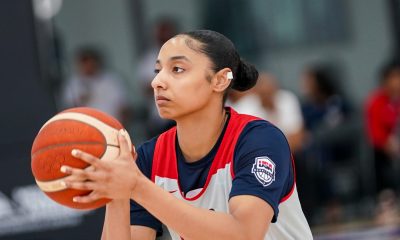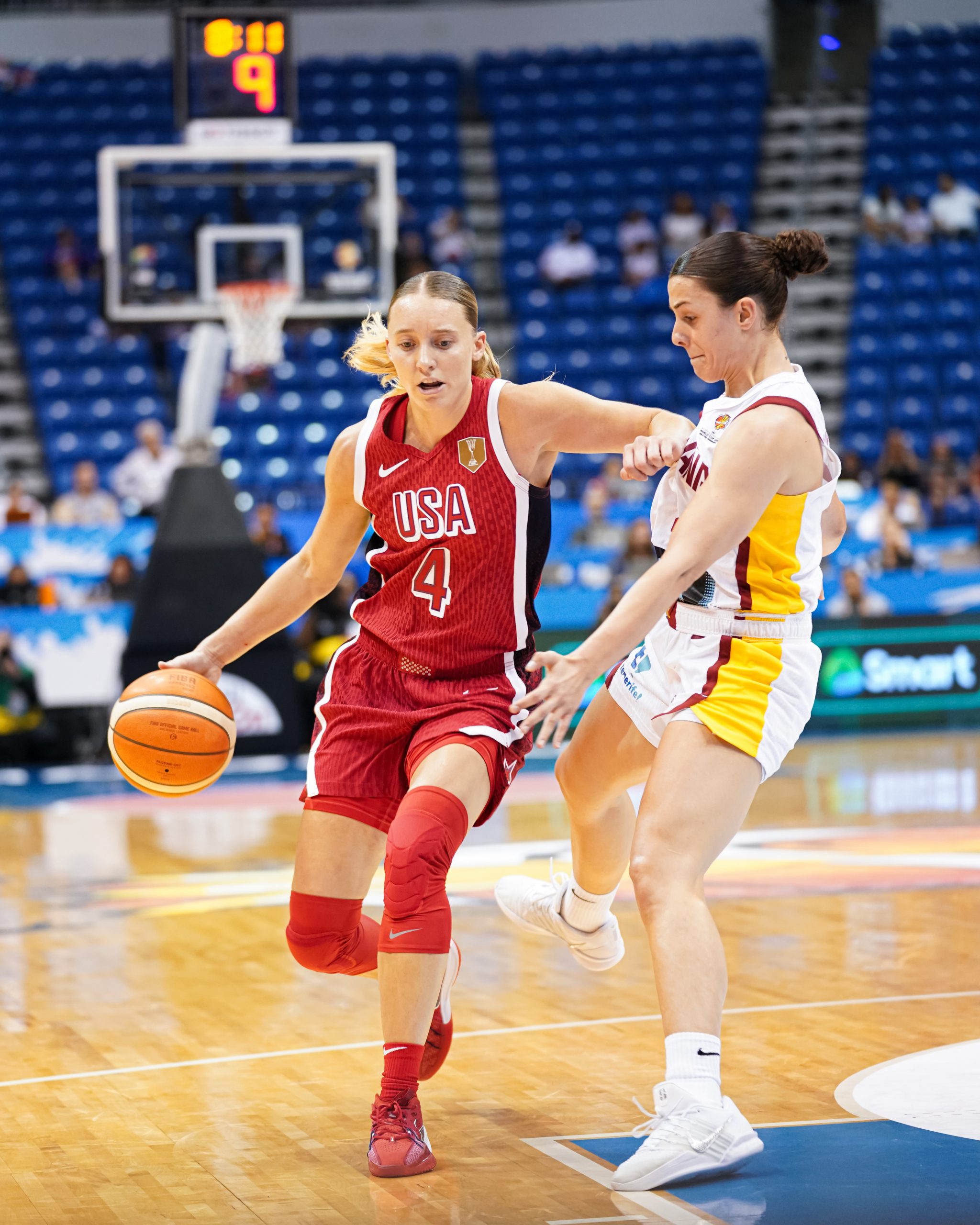
Paige Bueckers navigates the physical Spanish defense during the final qualifying match in San Juan, Puerto Rico. (Photo: USA Basketball)
SAN JUAN, Puerto Rico — When the final buzzer echoed through the Coliseo de Puerto Rico José Miguel Agrelot on Tuesday evening, signaling an 84-70 victory for Team USA over Spain, the box score offered a familiar narrative of American depth. Kahleah Copper sparked the offense with 20 points, while Kelsey Plum added 18. Yet, for those analyzing the tactical rhythm of the contest, the true story of the U.S. sweep in San Juan was found in the efficiency and poise of Paige Bueckers.
The 24-year-old Dallas Wings guard concluded her senior USA Basketball debut with a stat line that defined her impact throughout the tournament: nine points, two rebounds, two assists, and a team-high efficiency-per-minute. In a game where the lead occasionally fluctuated, the U.S. remained stable during Bueckers’ 19 minutes on the floor, finishing as a +9 in the 14-point win.
Coming off the bench or starting, Bueckers capitalized with her minutes, averaging 11.0 points per game, good for seventh overall in the San Juan group, and fourth among U.S. players.
This performance was the culmination of a journey that began long before the first whistle in Puerto Rico. During a USA Basketball media availability on Feb. 28, Bueckers reflected on the unique challenge of transitioning from a standout professional season to the storied culture of the National Team.
“I think there’s a perfect balance here of having veteran leadership and then youth,” Bueckers said. “So the next generation. So there’s a lot of people here that I want to learn from. And this is obviously my first experience with the senior national team, but having played FIBA before, it’s a different brand of basketball—very physical, very competitive. People are representing their country, so they’re obviously playing with a lot of passion and joy and fire. So it’s a high level of competition and it just brings the best out of you.”
The Defensive Standard
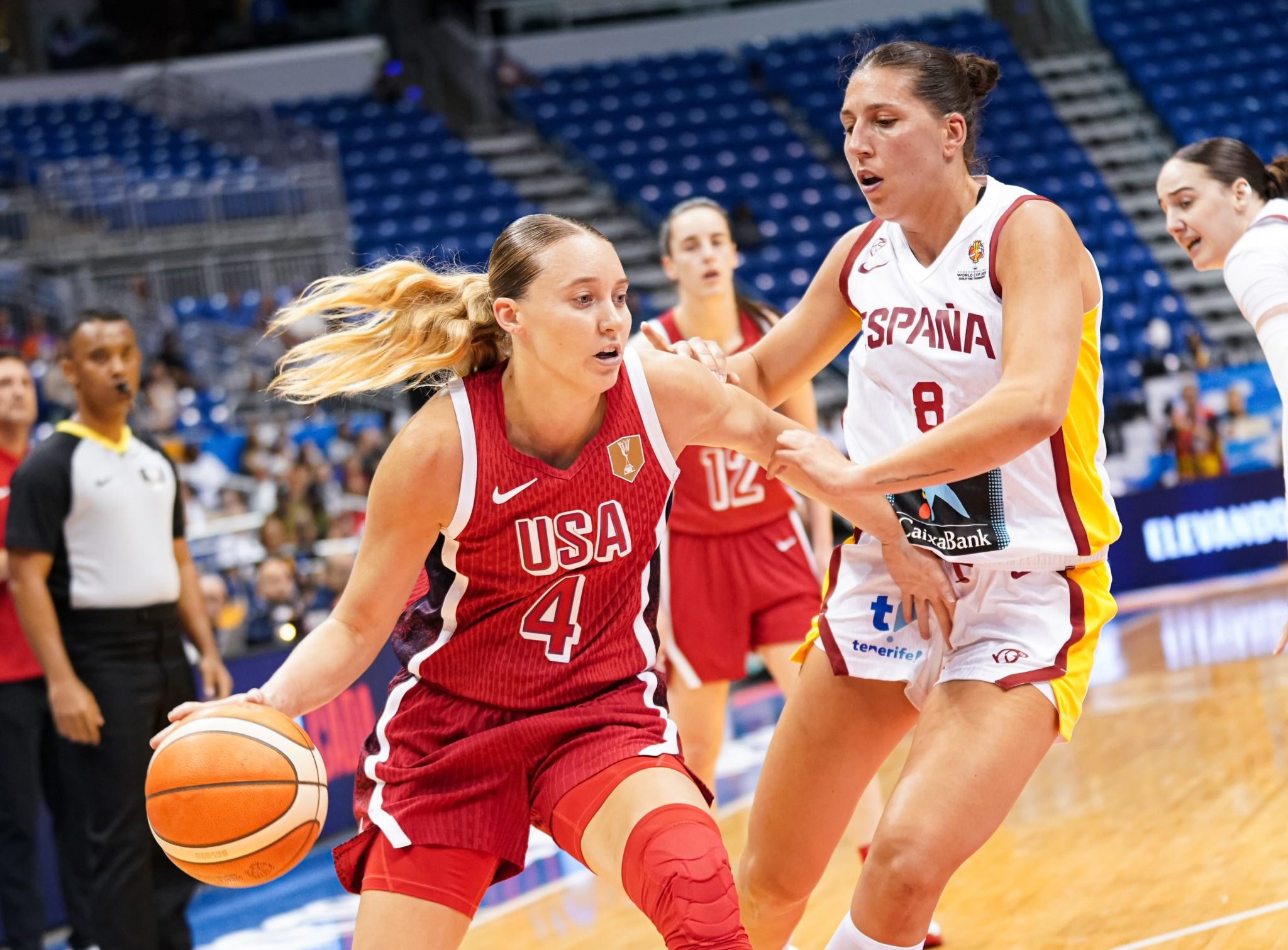
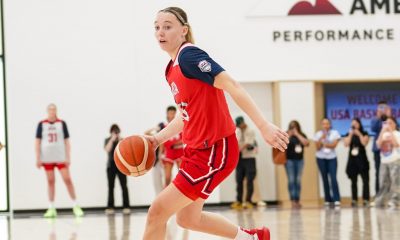
Focus and defensive positioning allowed Paige Bueckers to rank third in the tournament in steals. (Photo: USA Basketball)
Throughout the five-game qualifier, Bueckers prioritized the “student of the game” mentality she discussed in late February. While much of the external focus remained on the scoring output of a loaded roster, Bueckers quietly became the defensive anchor of the perimeter. She finished the tournament averaging 2.3 steals per game, ranking third overall in the San Juan bracket.
This defensive intensity was a calculated choice to provide exactly what the U.S. rotation required to maintain its 94-foot pressure. Speaking with Wilfredo Cubero of Talento Real following a victory over New Zealand earlier in the week, Bueckers detailed the philosophy behind her two-way play.
“When we set the tone on defense, our offense carries us in transition,” Bueckers told Cubero. “But it all starts on the defensive end, with us picking up 94 feet, getting in passing lanes, being disruptive, getting deflections and just playing our hearts out on the defensive end. Everything carries to the offense.”
It was that disruptive presence that allowed the Americans to pull away from a disciplined Spanish side in the fourth quarter. By sacrificing individual shot volume for defensive stops, Bueckers became the essential “connector” that veteran teammates like Breanna Stewart had encouraged her to be.
The Stewart Challenge
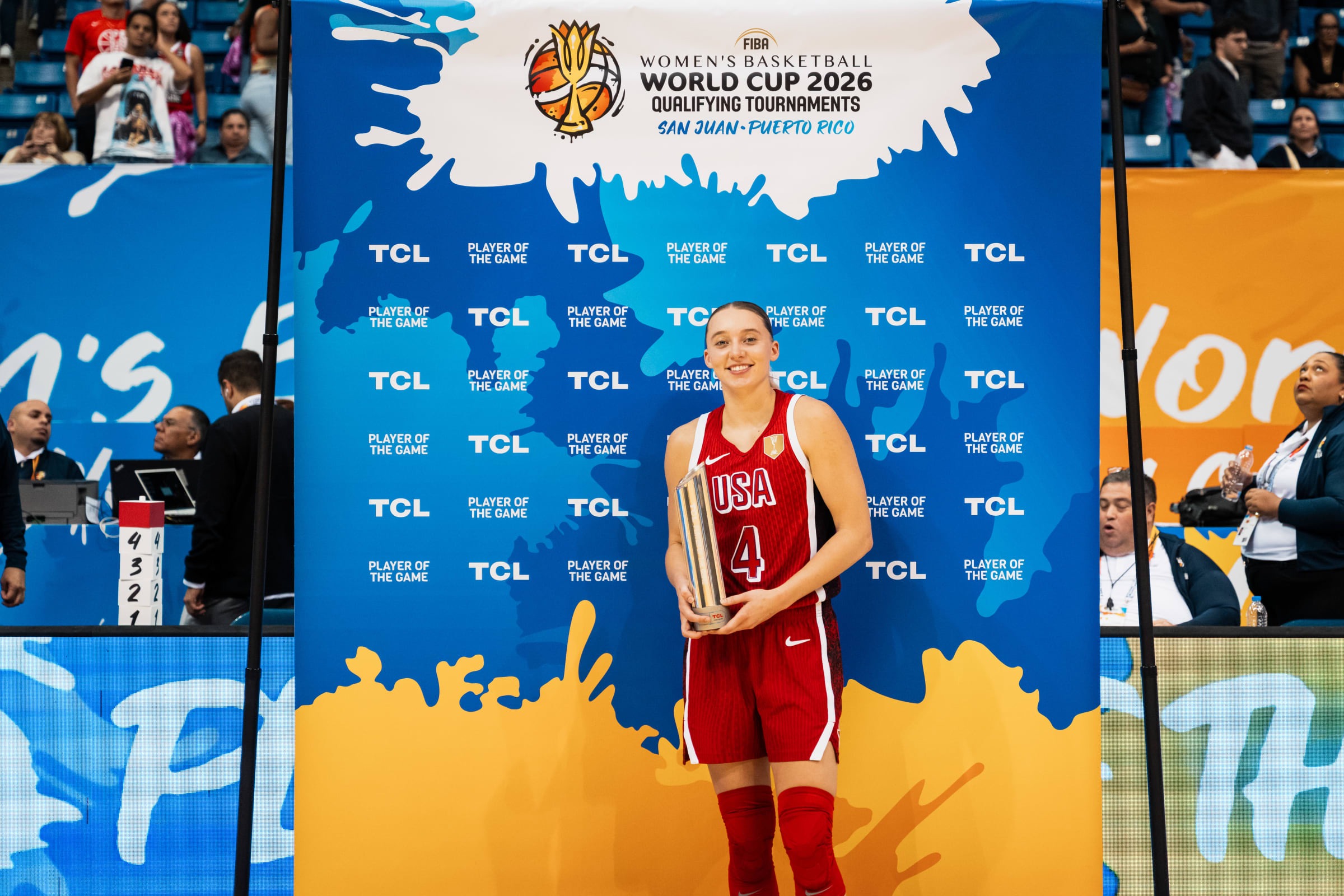
Paige Bueckers earns TCL Player of the Game honors following a standout performance against Puerto Rico. (Photo: fiba.basketball)
The role of a connector requires a specific lack of ego, particularly for a player of Bueckers’ stature. In the post-game mixed zone, she noted the necessity of being a multifaceted threat who can adapt to the needs of any given lineup.
“I’m just trying to do whatever it takes to win on any given night,” Bueckers said. “It might be different. It might be scoring one night, defending one night, assisting one night, being a playmaker… but I try to pull it all into one and just be able to play with any different lineup and do whatever it takes in that lineup and in that possession.”
Against Spain, that meant weathering a 4-of-9 shooting night and early foul trouble by refocusing on the technical aspects of the game—diving for loose balls and ensuring the ball moved fluidly in the half-court.
Building a Dallas Foundation
For followers of the Dallas Wings, the qualifiers offered a tantalizing preview of the 2026 WNBA season. Beyond her on-court production, Bueckers used the time in Puerto Rico to establish a foundational relationship with her new pro coach, Jose Fernandez. Fernandez, a staple of the South Florida basketball scene for over two decades, served as a scout coach for the National Team during the tournament.
“It’s great just to have that foundation and build experience,” Bueckers told Cubero regarding the Fernandez connection. “It is my first time playing under him and having that experience. So it’s been a good time to build that relationship here before we get moving into Dallas.”
That relationship is grounded in a leadership style that Bueckers has been honing since her time in Unrivaled. She noted the importance of accountability, both for herself and those around her.
“I think learning that calling people out is really just calling people up,” Bueckers said during the Feb. 28 availability. “And to do it in a way where it’s constructive and not personal… but also, I feel like my teammates need to see me hold myself accountable to those same standards. I can’t just be demanding things of other people if I don’t do it myself.”
Representing the Journey
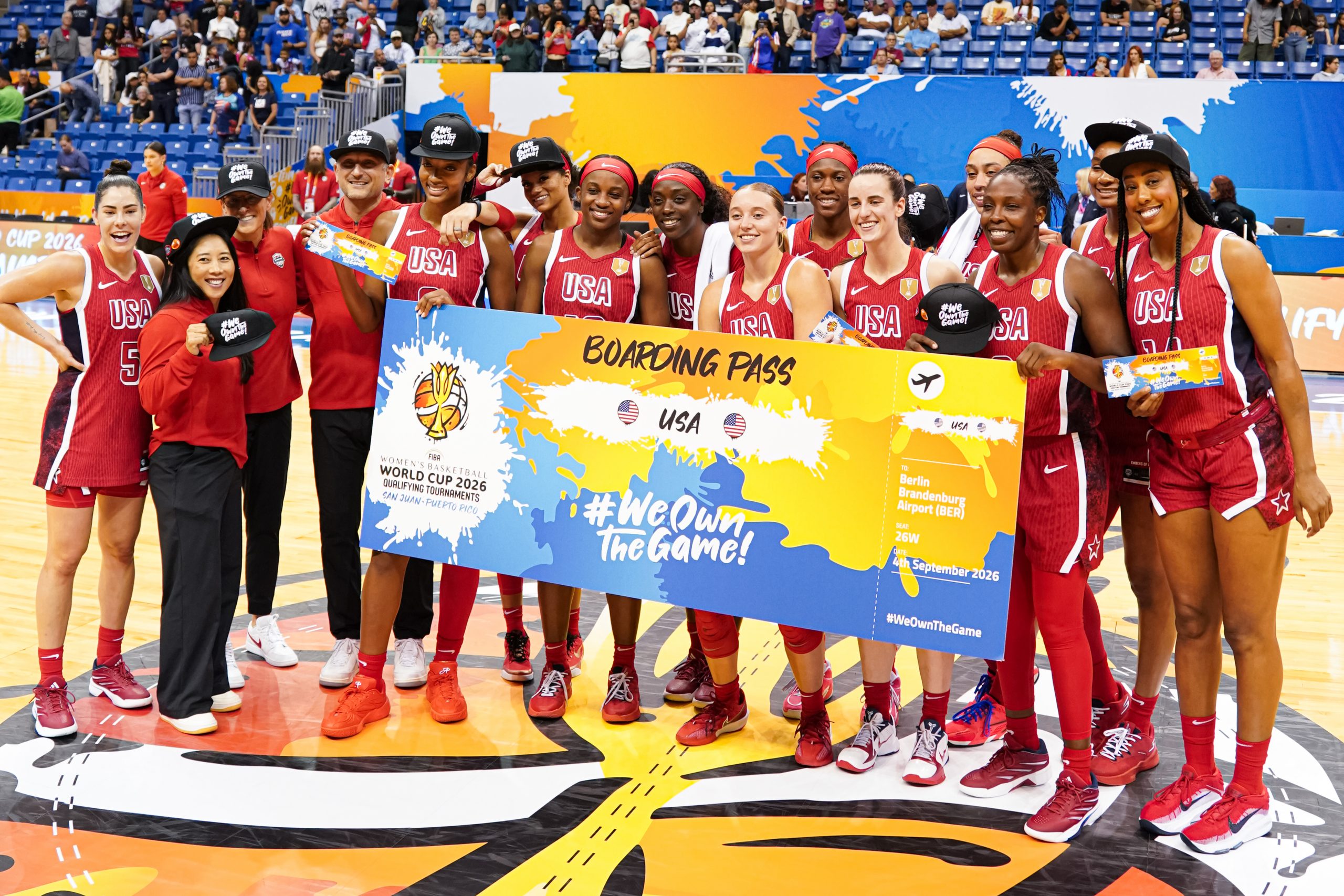
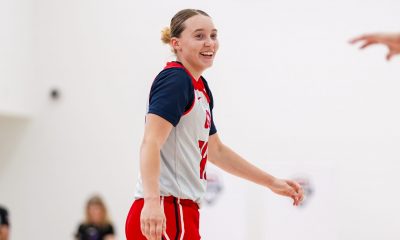
Mission accomplished: Paige Bueckers and Team USA celebrate securing their “Boarding Pass” to Berlin. (Photo: USA Basketball)
As the Americans prepare to pivot back to their WNBA markets before reuniting for Berlin in September, Bueckers carries the weight of the communities that have supported her rise. Whether it is her hometown of Hopkins, Minnesota, or her new basketball home in Dallas, Texas, the significance of the stage is never lost on her.
“Each stop in my journey has meant so much to me,” Bueckers said. “It’s been a huge part of who I am and what I’ve become. And there’s so many people along the way that have helped me get to this spot. So every time I step out on the court, I feel like I’m always representing something so much bigger than myself. And then to be able to put USA across your chest—it’s truly an honor.”
The qualifiers in San Juan were as much about legacy as they were about the future. Bueckers often referenced the UConn legends who preceded her, such as Diana Taurasi and Sue Bird, noting the “passion” they brought to the red, white, and blue.
“They set the stage on what we want this to look like,” Bueckers told the media. “The competitive fire. The winning. The pride. We want to put action behind it and really follow through with that.”
With a 5-0 record and a ticket to Berlin secured, the “action” in San Juan was definitive. Paige Bueckers didn’t just participate in the qualifiers; she stabilized the rotation and proved that the next generation of USA Basketball is ready for the international spotlight.
Berlin is the next destination, but the foundation laid in the Caribbean suggests the Americans have found the right stabilizer for the road ahead.