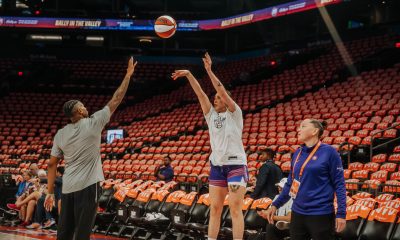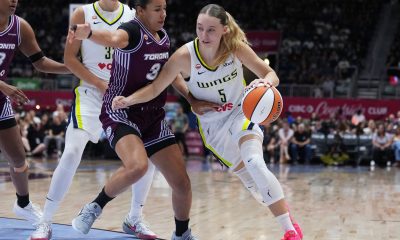
Jessica Shepard (32) of the Dallas Wings made history against the Las Vegas, becoming the first player to score 22 points, 20 rebounds and 10 assists. (Photo: Rachel Schuoler | The Podium Finish)
ARLINGTON, Texas — The modern iteration of professional basketball frequently demands that frontcourt players adapt to a perimeter-centric landscape, yet few individual performances have structurally redefined a team’s offensive ceiling like the one delivered on Thursday night. Dallas Wings center Jessica Shepard anchor-dropped her name into the league record books, securing a performance that shattered standard box score expectations and propelled her franchise to a definitive statement victory over the defending champion Las Vegas Aces.
Shepard concluded the evening with 22 points, 20 rebounds, and 10 assists, becoming the first player in WNBA history to cross the 22-20-10 threshold in a single game. The performance did more than merely solidify a statistical anomaly; it served as the tactical engine that allowed Dallas to erase an eight-point halftime deficit and completely restrict the structural capabilities of a physical Las Vegas roster. While the historical gravity of the stat line reverberated throughout the broader basketball landscape, Shepard remained distinctly unaffected by the individual accolades in the immediate aftermath of the milestone.
“You know, I didn’t feel it,” Shepard said when asked about the onset of her historic evening. “If you knew how I felt in warmups, this is a shock. So, no. In the second half I felt that we were picking up the momentum, and yeah. I didn’t feel it.”
The victory improves Dallas to a 5-3 record through the opening eight games of the 2026 regular season. For a franchise that navigated a tumultuous training camp defined by late arrivals and rapid roster assimilation under a new coaching staff, Shepard has emerged as the definitive stabilizing force. Her unique skill set allows Dallas to challenge traditional defensive philosophies by operating as a high-post hub capable of initiating the offense directly off the defensive glass.
Prior to this intensive homestand, Dallas had flashed elite potential but struggled with baseline continuity, specifically during late-game executions against physical teams. Early season losses to Atlanta and Minnesota exposed defensive vulnerabilities when half-court shells cracked under pressure, resulting in three instances where late fourth-quarter leads dissolved.
In those contests, the offense became isolated, stagnating when perimeter guards were forced into contested, late-clock situations. The integration of Shepard as a primary facilitator has systematically ironed out those spacing deficiencies.
The Gamechanger
The tactical advantage of a passing center was on full display during a pivotal second-half stretch where Dallas outscored Las Vegas 50 to 34. As the Aces attempted to crowd perimeter shooters like Paige Bueckers and Azzi Fudd, Shepard consistently diagnosed the defensive overshifts, delivering precision passes to backdoor cutters or identifying open stationary targets across the floor.
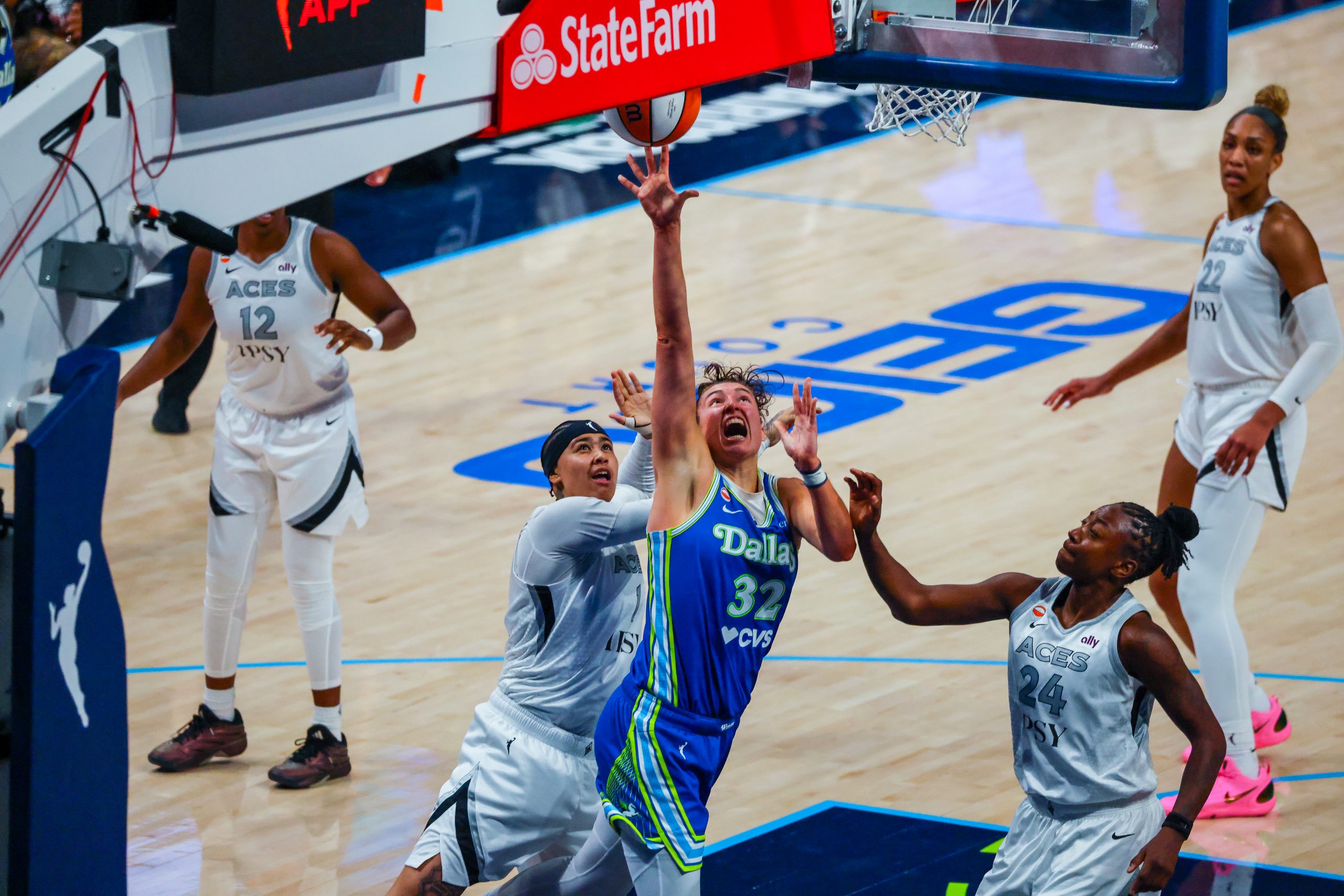
Jessica Shepard has been the Dallas Wings’ secret weapon, excelling in pick and roll plays and having that incredible court vision to cut toward the net. (Photo: Rachel Schuoler | The Podium Finish)
“Yeah, I mean, when you have great scorers and great shooters, you kind of have to pick what you’re going to give away as a defense,” Shepard said. “Obviously, they didn’t want them to be able to come off and shoot, and you know, Paige was doing a great job of just reading that and getting the backdoor cut. And then when you have Azzi or Arike [Ogunbowale] coming off that pin, it puts the defense in a really difficult situation.”
This capacity to direct traffic from the interior has drawn lofty stylistic comparisons from opposing coaching staffs. Prior to tip-off on Thursday, Las Vegas head coach Becky Hammon drew a direct parallel between Shepard’s multi-faceted role and the defensive-to-offensive facilitation style of veteran forward Draymond Green. It is an archetype rooted in utility, sacrificing traditional center isolation plays for the fluid generation of team-wide advantages.
“Oh, I mean I think he’s a player that’s a champion many times for a reason,” Shepard said regarding the pregame comparison. “He’s willing to do whatever the team needs to win. So, in comparisons to that aspect of his game, yes. I think other aspects, maybe I can score a little better than him. But I like you, Draymond. All love.”
The administrative value of Shepard’s processing speed is amplified by the specific roster construction surrounding her. Dallas head coach Jose Fernandez has repeatedly emphasized a desire to push the tempo, transitioning rapidly from defensive possessions into early offense before opposing half-court shells can properly form. Traditional basketball methodology dictates that guards collect the outlet pass to dictate pace, but Shepard’s individual rebounding capability bypasses that middle step entirely.

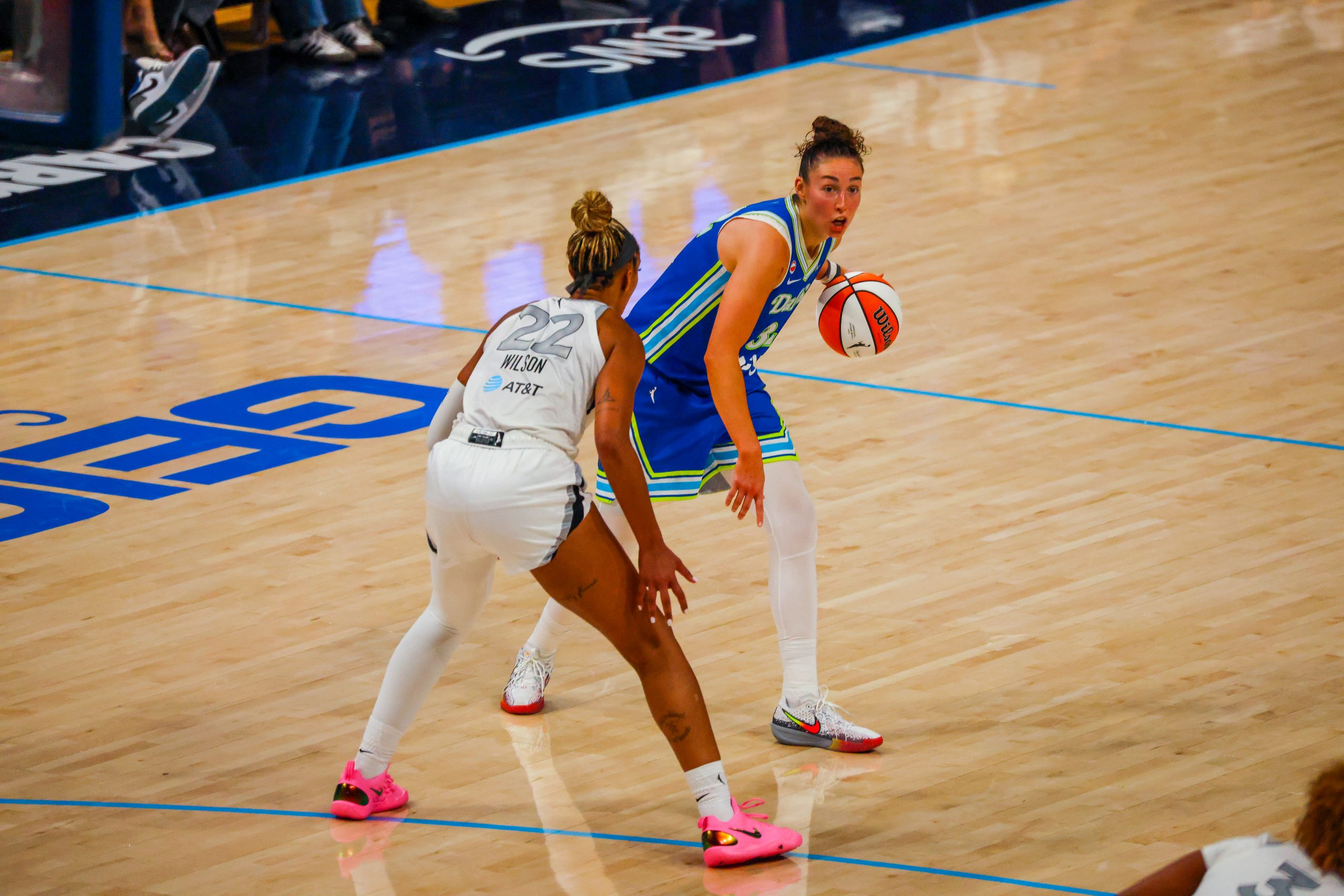
Jessica Shepard (32) of the Dallas Wings surveys the court, orchestrating a masterpiece performance like a skillful conductor. (Photo: Rachel Schuoler | The Podium Finish)
When Shepard secures a defensive rebound, she acts as an immediate primary ball-handler, pushing the ball through central lanes while her guards sprint to the extreme corners of the perimeter. This inverse fast-break structure forces opposing interior defenders to backpedal rapidly while simultaneously identifying assignment shifts on the move, a defensive exercise that frequently results in open looks or clean lanes to the rim.
Fernandez underscored this exact strategic mandate during his post-game remarks, noting that Shepard’s ability to pull down defensive rebounds and instantly initiate transition completely changes how opposing guards must defend. Rather than tracking their own assignments, defenders are forced into cross-matching situations while retreating, which breaks down the structural integrity of their perimeter defense.
The Chase for the Commissioner’s Cup
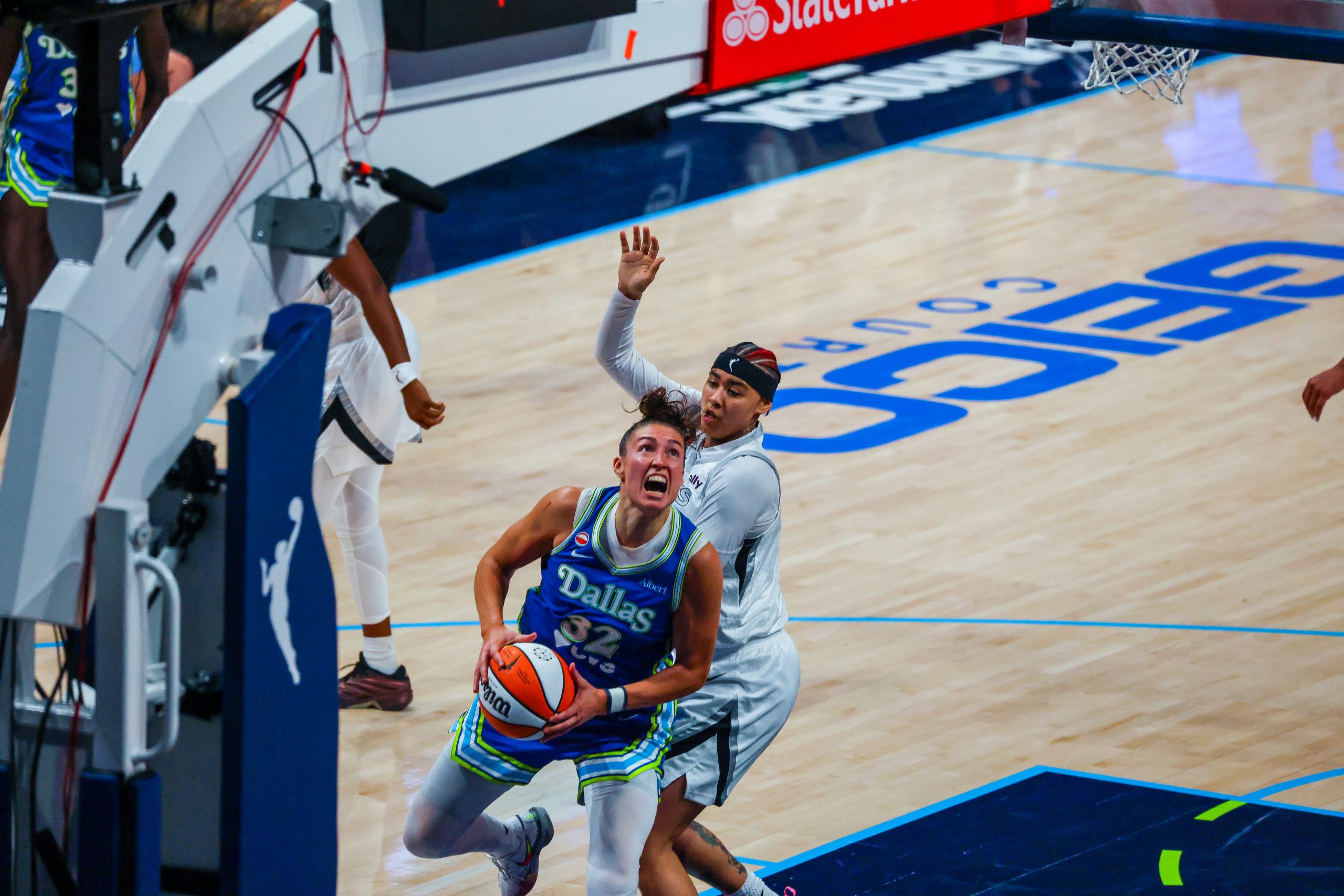
Jessica Shepard of the Dallas Wings may evoke thoughts of contemporaries in the NBA, but her point forward style echoes the great Larry Bird. (Photo: Rachel Schuoler | The Podium Finish)
Through the first eight games of the season, this operational blueprint has allowed Dallas to establish a distinct offensive identity despite limited collective preparation time. While the team had previously shown instances of variance, the consecutive statement performances against high-profile opponents suggest a rapid stabilization of the team’s baseline performance level. The roster is beginning to understand how to leverage Shepard’s spatial awareness, creating a compounding effect that elevates the efficiency of every player on the floor.
For Shepard, the long-term projection of the roster relies entirely on maintaining the collective connectivity that defined Thursday’s second-half surge. By operating as the selfless connective tissue between a young perimeter core and a veteran defensive baseline, her historic numbers stand as a byproduct of a broader structural commitment to corporate execution. She remains focused on the daily habits required to sustain this momentum through a grueling regular season schedule.
As the franchise prepares to transition into the upcoming WNBA Commissioner’s Cup schedule, the historical milestone established at home serves as a definitive proof of concept. The numbers will remain etched in the league archive, but for the focal point of the Dallas interior, the premium value remains anchored to the structural growth of the collective unit. Dallas has demonstrated that when their interior and exterior elements operate in symmetry, they possess the tactical tools necessary to dismantle any defensive scheme in the league.