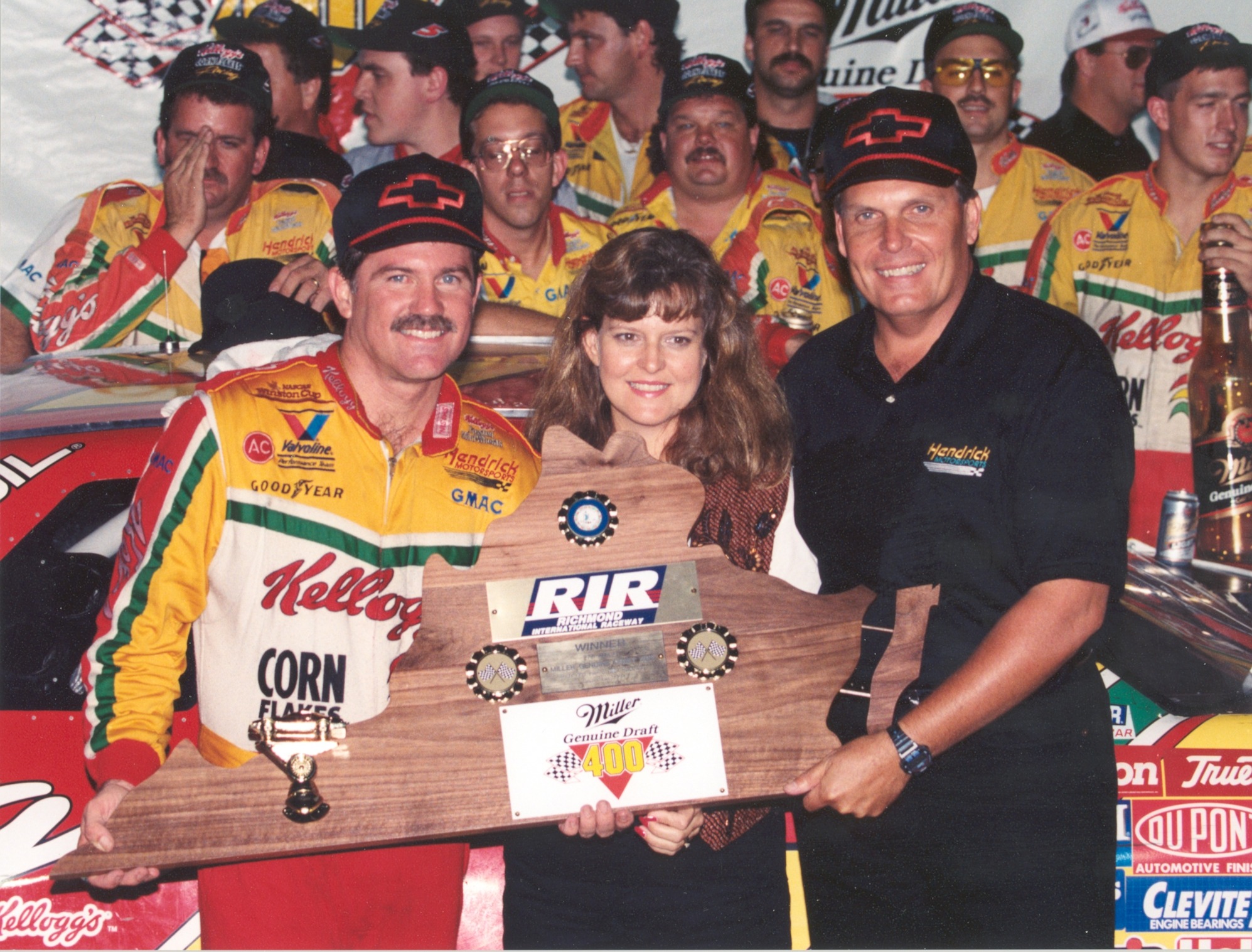
Terry Labonte celebrates his Miller Genuine Draft 400 victory at Richmond International Raceway on Sept. 10, 1994, with his wife, Kim, and team owner, Rick Hendrick. After a challenging stint with Billy Hagan, Labonte’s move to Hendrick Motorsports in 1994 revitalized his career. (Photo: ISC Images & Archives via Getty Images)
GEORGETOWN, Texas — In the modern era of professional stock car racing, where multi-car dynasties and engineering departments with hundreds of employees are the standard, the story of Terry Labonte feels like a narrative from a different world. For the man known as “The Iceman,” a career that spanned nearly four decades was defined not by corporate polish, but by a relentless, quiet grit that earned him two NASCAR Cup Series championships and a place in the NASCAR Hall of Fame.
As the 30th anniversary of his second title approaches, Labonte sat down for an extensive look back at the decisions and eras that shaped his journey. While history books often focus on the statistics, the real story lies in the moments where the road diverged, most notably in 1993, when a secret offer from a legendary owner almost changed the course of NASCAR history.
At the time, Labonte was mired in a challenging second stint with owner Billy Hagan. Having won the 1984 championship together, the pair had reunited in 1991, but the magic of their early years had been replaced by a struggle to keep pace with a rapidly evolving sport. As the 1993 season progressed, Labonte found himself at a crossroads, sought after by two of the most respected names in the garage: Bud Moore and Rick Hendrick.
The Decision
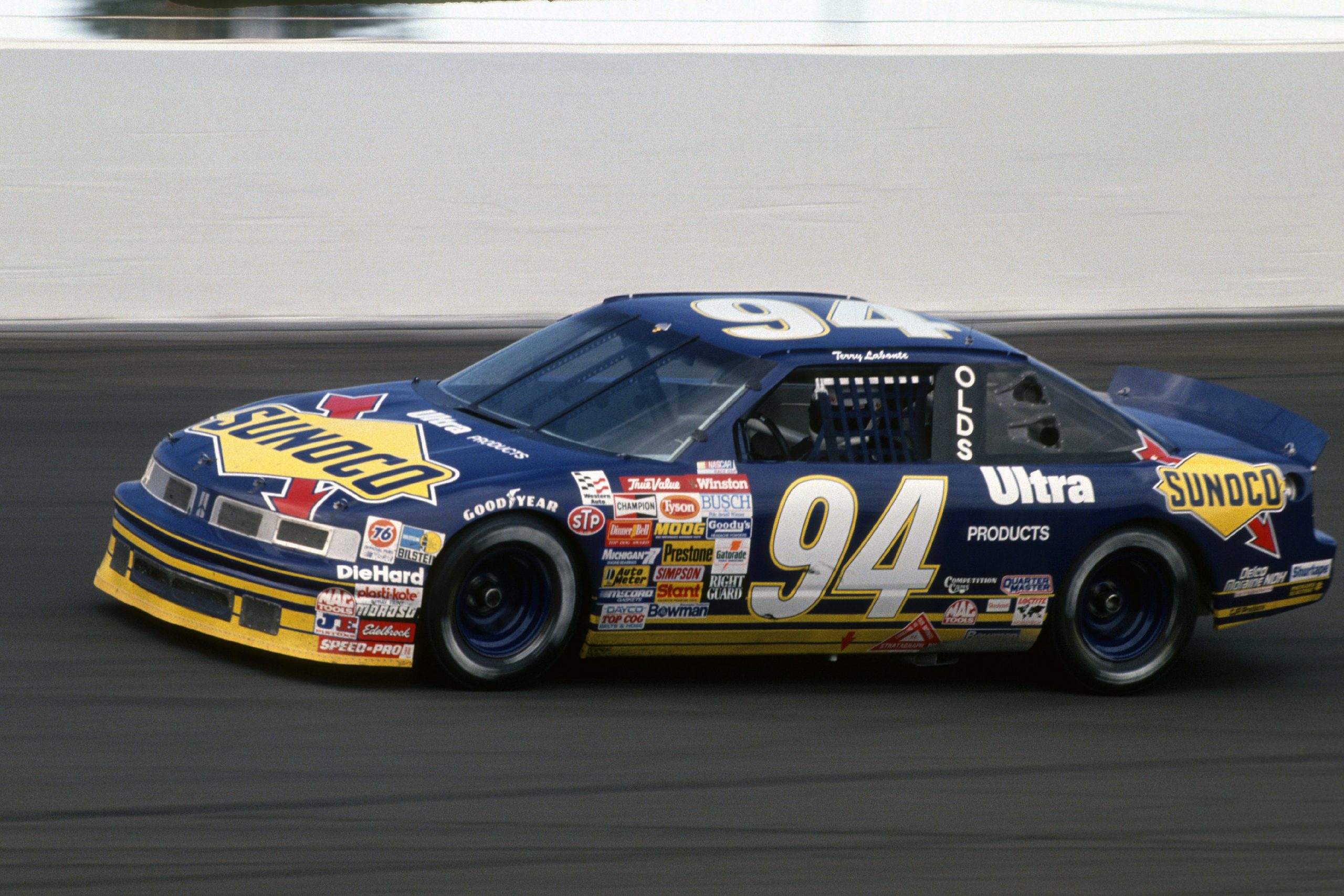
Terry Labonte pilots the No. 94 Sunoco Oldsmobile during the 1991 Mello Yello 500 at Charlotte Motor Speedway. Labonte’s second stint with Billy Hagan required a “Texas Tough” approach as the team fought to keep pace with the sport’s rapid evolution. (Photo: Nigel Kinrade | Nigel Kinrade Photography [NKP])
“I had made my mind up that I was probably going to do something different,” Labonte recalled. “I just felt like you know, we just weren’t going to be able to get to where we needed to be at there.”
The offer from Bud Moore was lucrative and carried the prestige of a factory-backed Ford seat in the iconic No. 15. For many drivers, the financial security and the chance to lead a legendary single-car operation would have been an easy choice. Labonte even visited Moore’s shop, where a contract was waiting on the desk and a Ford representative was on the phone, ready to finalize the deal.

The No. 94 Sunoco Oldsmobile takes on the concrete surface of Bristol Motor Speedway in 1992. During this era, Labonte’s team rotated between different manufacturers, including Oldsmobile and Ford, in a search for consistent speed. (Photo: Nigel Kinrade | Nigel Kinrade Photography [NKP])
However, a stop at Hendrick Motorsports on the way home provided a glimpse into a world Labonte hadn’t yet experienced.
“I saw the facility, I saw the dedication that they had to winning races and winning championships,” Labonte said. “They had all the pieces that it was going to take right there. I mean they had they had built what I felt like was an opportunity to win that another championship I was wanting to win. And nothing against Bud Moore’s team, but there was no comparison to Bud Moore’s team and Rick Hendrick’s team equipment wise.”
The decision was a gamble. At Hendrick, Labonte would be the veteran presence in a three-car stable that included Ken Schrader and a young, meteoric Jeff Gordon. Some peers questioned why a former champion would willingly step into a “third car” role, but Labonte saw the bigger picture.
“One guy came up to me, said, ‘You can drive for Hendrick Motorsports and not Bud Moore?’ I said, ‘Yeah.’ They said, ‘I know Bud Moore offered you more money.’ I said, ‘Yeah.’ ‘You’re going to be the third car in a three-car team.’ I said, ‘Yeah. But the third car in a three-car team is better than the first car where I was at,'” Labonte explained.
The move revitalized Labonte’s career and fundamentally shifted the power balance of the sport. While the No. 15 team would eventually fade from the front of the pack, the No. 5 Kellogg’s Chevrolet became a perennial contender. The partnership was so strong that even the sponsors couldn’t stay away; after Labonte signed with Hendrick, the Kellogg’s Company reached out to follow their driver to his new home.
“About two days later they called back and they said, ‘Hey, if we could can we go to Hendrick Motorsports too?'” Labonte said. “Kellogg’s joined me down there at Hendrick Motorsports, which was unbelievable. It was a great combination.”
Hagan Enterprises: From Texas to Riverside
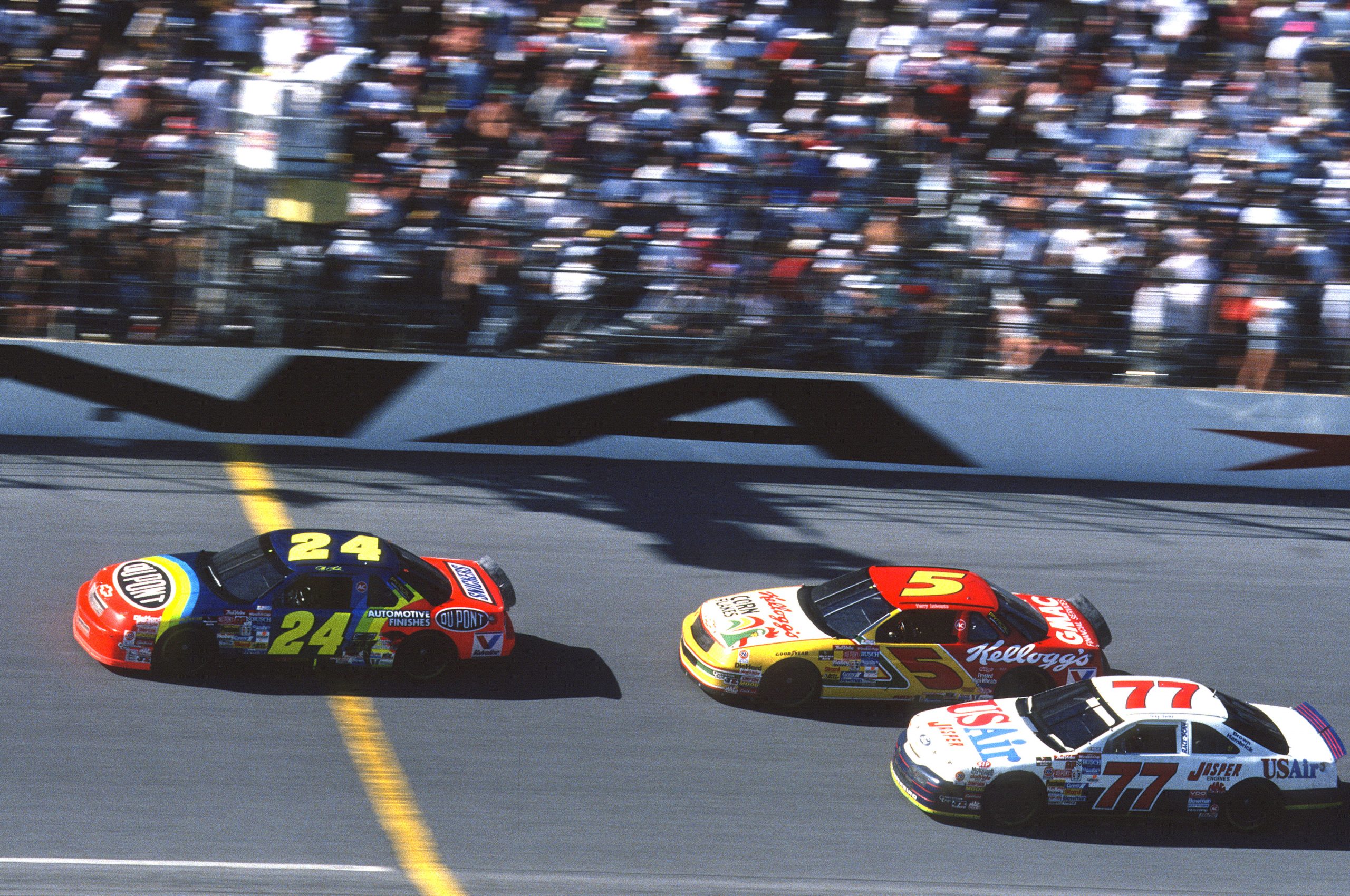
Terry Labonte, in the No. 5 Kellogg’s Chevrolet, drafts Jeff Gordon’s No. 24 DuPont Chevrolet during the 1994 Daytona 500. Choosing the Hendrick “third car” over more lucrative offers resulted in three wins during his debut season with the organization. (Photo: Nigel Kinrade | Nigel Kinrade Photography [NKP])
This transition marked the beginning of a second acts for “The Iceman,” but his roots remained firmly planted in the “home-brew” culture of the 1980s. Before the high-tech campuses of Charlotte, there was the No. 44 Texas-led operation of Billy Hagan. Coming from Corpus Christi, Labonte and Hagan were outsiders in a North Carolina-centric industry, a dynamic that forced the team to earn respect through sheer performance.
“Being a newcomer like I was coming in, you have to really—you’ve got to earn your respect from everybody,” Labonte said. “We were just kind of really trying to learn. Billy had a team; the team was existing before I started. And Billy was sponsoring my short track car in Texas. And then he gave me the opportunity to move to North Carolina and run his Cup car.”
The “Texas Tough” mentality paid off in 1984. Facing off against legends like Richard Petty, Cale Yarborough, and a rising Bill Elliott, Labonte’s consistency proved to be the winning formula. He recalled the final race of the year at Riverside International Raceway, a grueling road course that sat in the California desert. The race was delayed by rain and finished in near-darkness, a setting that suited Labonte’s cool demeanor.
“I’ll never forget that we won our first race at Darlington in 1980,” Labonte said. “And we’re up in the press box after the race and Billy said, ‘Yeah, I think we’re going to probably win the championship within five years.’ I looked at him and I thought to myself, ‘We just won our first race, you know? You’re predicting a championship?’ But in 1984, we won the championship.”
In those years, the garage was a different place. Teams were smaller, and the “cat and mouse” game between crew members and NASCAR inspectors was part of the weekly ritual. Labonte spoke with a quiet admiration for the resourcefulness of that era, specifically the leadership of his 1984 crew chief, Dale Inman.
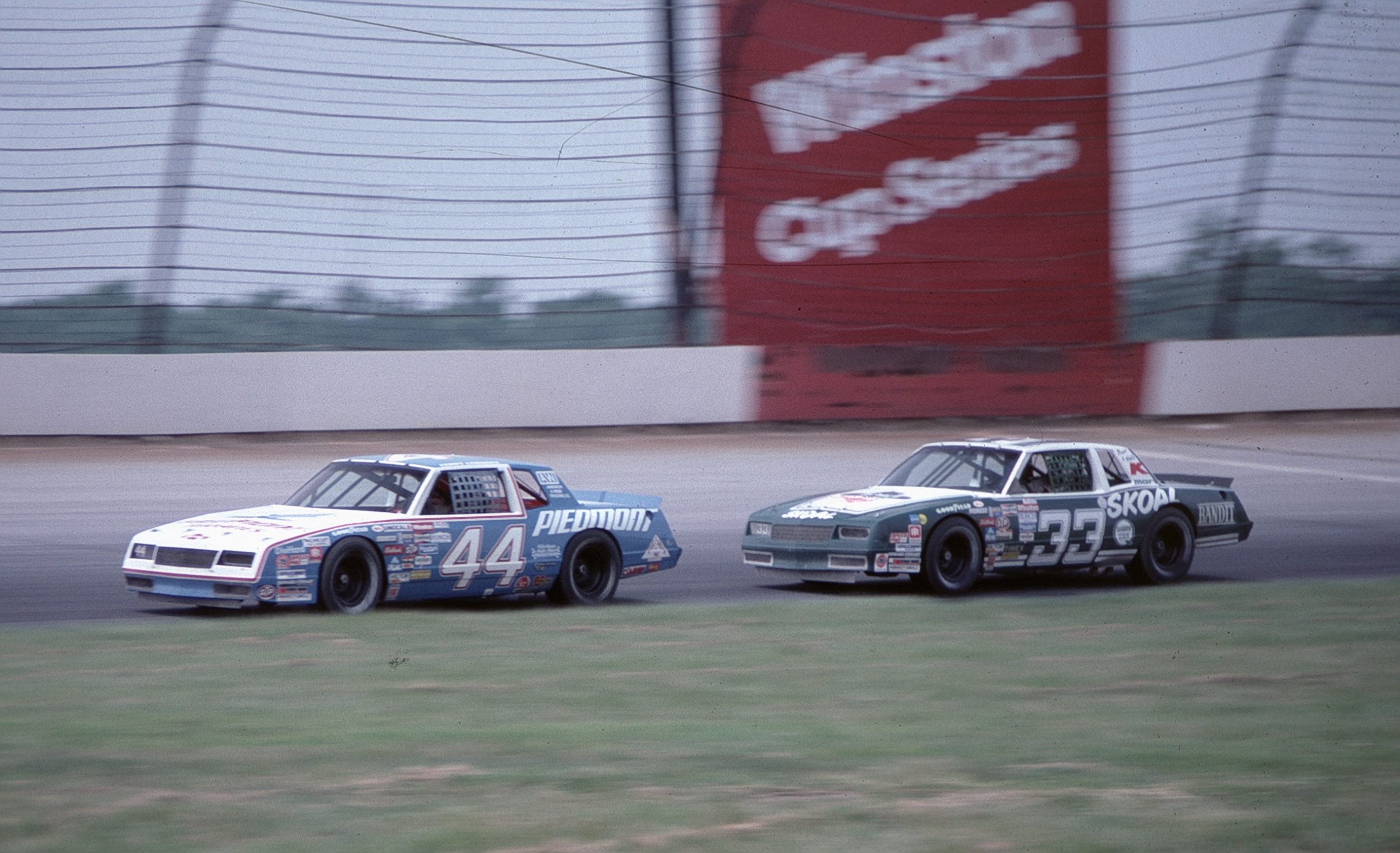
Terry Labonte (No. 44) leads Harry Gant (No. 33) through the Tunnel Turn at Pocono Raceway in 1985. The two veterans engaged in a legendary, down-to-the-wire battle for the 1984 Winston Cup championship. (Photo: Ted Van Pelt | Flickr)
“Dale Inman is like one of the very few guys that I’ve ever been around who is not afraid to hire people smarter than him,” Labonte said. “He worked hard at trying to get the best people he could to come work on that team. He was a great leader in the aspect that he surrounded himself with really good people that could do different things on the team that could do them better than Dale could.”
That willingness to adapt, whether it was learning from a legend like Inman or joining a new multi-car powerhouse like Hendrick, allowed Labonte to remain relevant across three decades. His career survived the “Junior Johnson era” of the late 80s, where engine failures often thwarted championship-caliber speed, and it thrived during the popularity boom of the 90s.
Word from “Texas Terry”
When asked what advice he would give to the 28-year-old version of himself in 1984, or the veteran facing uncertainty in 1993, Labonte’s answer was as steady as his driving style.

Terry Labonte (left) confers with teammate Jeff Gordon at Talladega Superspeedway in 1996. Labonte’s veteran presence was a cornerstone of Hendrick Motorsports’ early multi-car success. (Photo: Nigel Kinrade | Nigel Kinrade Photography [NKP])
“You always have to do what you think is right for yourself in with what you know, and just always always try to be your best,” Labonte said. “And there’s going to be times that you make mistakes and times that things don’t go right, and you know you just learn from that and don’t ever look back on it. I don’t have any regrets as far as I wish I’d have done this, wish I’d have done that—that’s too easy to do. But at the time you always just do what you think is right, and you always have to work as hard as you can and don’t ever give up.”
For a driver who made a living outlasting the competition, the philosophy was simple: it isn’t about being the loudest in the room or the fastest on a single lap—it’s about being there at the end. As Labonte looks back on a legacy that includes 22 wins and two championships, he remains the personification of the dignity and class he brought to the cockpit.
“I’m just so thankful for everything that kind of came my way,” Labonte said. “I still follow racing and still watch it, and some days I wish I was there and a lot of days I’m glad I’m not there. So anyway, that’s just how it is I guess.”
As the sport continues to change, the story of Terry Labonte serves as a reminder of an era where “Texas Tough” was more than just a nickname. It was a way of life on the high banks and short tracks of America.
Editor’s Note
This feature is the first in a three-part series celebrating the legacy of Terry Labonte. Check back for Part 2, a deep dive into the “Texas Underdog” years of the 1980s, and Part 3, featuring Labonte’s unfiltered reflections on the “Iceman” era.