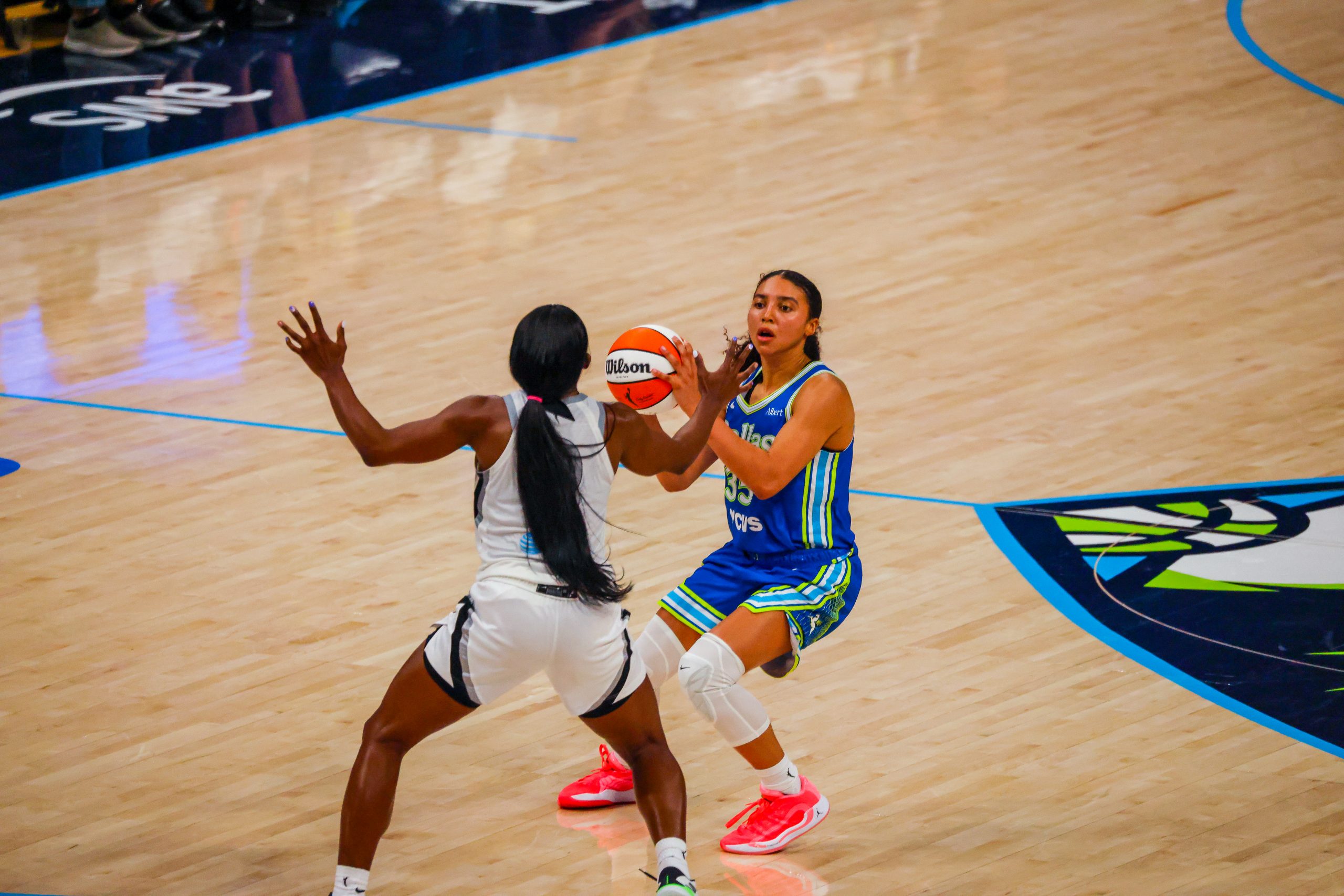
Azzi Fudd (35) of the Dallas Wings played with confidence and poise in her first career WNBA start in a 95-87 win over the Las Vegas Aces. (Photo: Rachel Schuoler | The Podium Finish)
ARLINGTON, Texas — Roster transformations within professional basketball are frequently evaluated through the acquisition of new assets, yet the ultimate ceiling of a franchise often hinges on the calculated return and aggressive standardization of its elite perimeter shooters. As the Dallas Wings navigated the early operational hurdles of the 2026 WNBA regular season, the mandate for structural floor spacing required a definitive perimeter engine capable of capitalizing on high-IQ interior distribution.
Rookie guard Azzi Fudd, the No. 1 overall pick of the WNBA Draft, has forcefully stepped into that vacuum, delivering a consecutive sequence of high-efficiency scoring performances that have solidified the team’s offensive geometry.
Following a definitive 24-point performance on Sunday afternoon against the New York Liberty, Fudd backed up her production by anchoring the perimeter during Thursday’s statement victory over the defending champion Las Vegas Aces, finishing with 22 points and providing critical spacing during a blistering second-half turnaround in College Park Center.
The immediate momentum of the evening was established before the opening tip, as Fudd was inserted into the starting lineup, a strategic shift that elicited an immediate reaction from both the player and a passionate home crowd.
“Obviously, it is amazing,” Fudd said regarding the energy inside the arena. “Anytime I can step on the floor with this group, it is an honor and I don’t take it lightly. So to again, to be on the floor, whether it is coming off the bench, starting, I am super grateful.”
Dallas Wings head coach Jose Fernandez sang his praises about Fudd’s quick transition from the college ranks to the pros, learning and growing in real-time while making immediate waves with her play on the court.
“I like seeing her being so aggressive putting the ball on the deck like she has been when people defend her off a stagger, off a floppy, or off of a flare screen, which they do really good,” Fernandez said. “Where we just got to sometimes be a little bit more patient, let her relocate to get back to her like a pin-down screen so we can get her in space again.”
Professional Grade
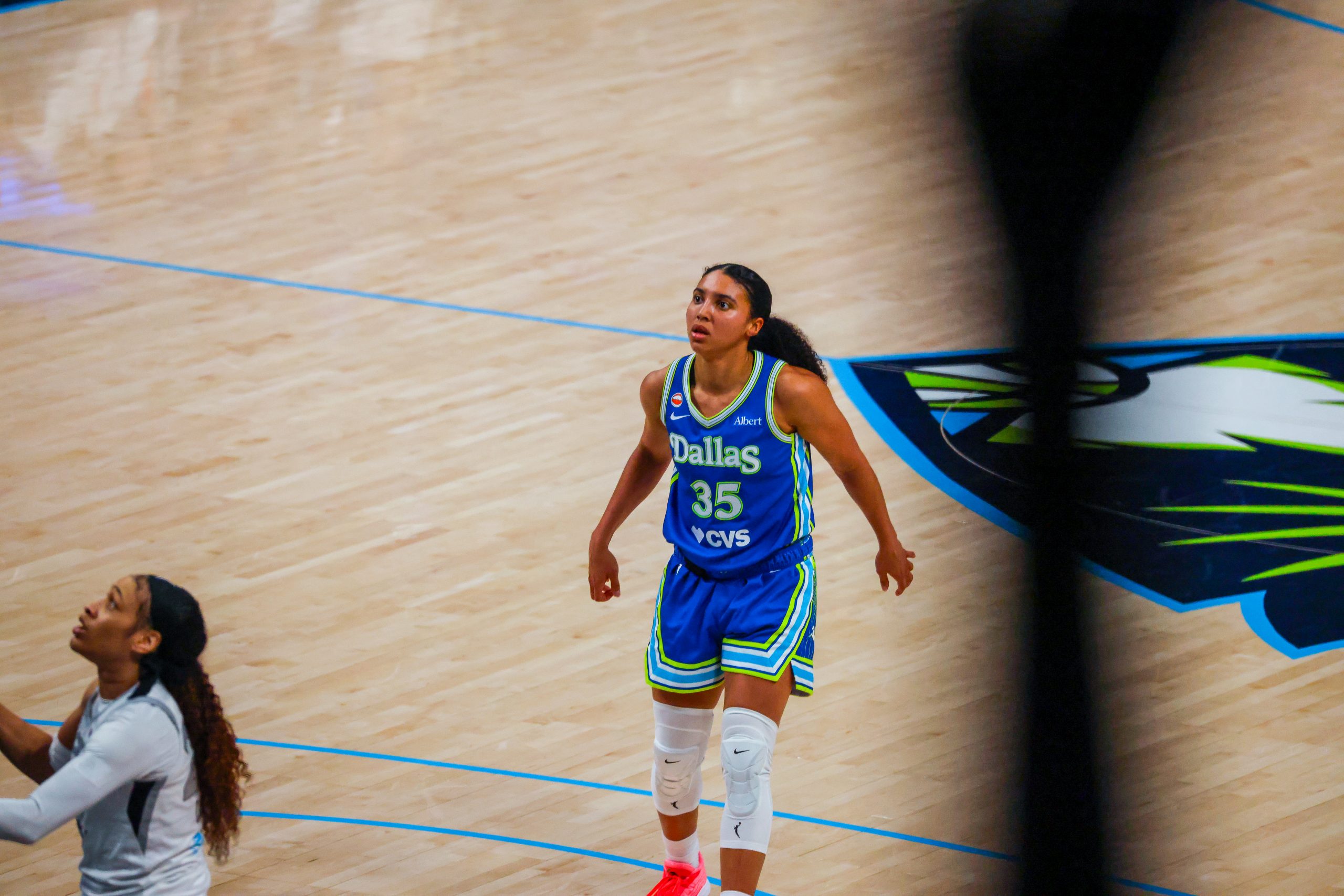
Azzi Fudd (35) of the Dallas Wings kept focused in her first career WNBA start and earned the praises of WNBA on Prime Video’s Cynthia Cooper, scoring at least an A grade in her perspective. (Photo: Rachel Schuoler | The Podium Finish)
That gratitude translated directly into a highly assertive offensive approach. Through the first eight games of the regular season, Dallas has worked to integrate late training camp arrivals into a fluid offensive system orchestrated by a new coaching staff. For a pure perimeter shooter, a changing roster landscape can frequently disrupt baseline rhythm, yet Fudd has found stability by leaning into the physical screening actions of a versatile frontcourt.
The synergy between Fudd and center Jessica Shepard, who recorded a historic triple-double during Thursday’s contest, has quickly developed into one of the more difficult pick-and-stagger actions for opposing defenses to properly navigate.
“I think just feeling more comfortable each game, being aggressive, first of all, not hesitating when I am open,” Fudd said. “When Jess and Kay [Arike Ogunbowale] and them set me great screens, I am not hesitating to use them. But I think just reading what the game is giving me, not ever trying to force to score, but just be aggressive.”
That calculated aggression proved vital during a second half where Dallas flipped an eight-point deficit by outscoring Las Vegas 50 to 34 across the final twenty minutes. As the Aces attempted to compress the lane to restrict Shepard’s interior operating space, Fudd’s presence on the wing forced secondary defenders to remain attached to the perimeter, preventing the deep drop coverage that had stalled the Dallas offense during the early stretches of the first half.
When Las Vegas did attempt to cheat over the top of screens to minimize Fudd’s catch-and-shoot availability, the sophomore guard demonstrated a critical evolutionary leap in her individual game: putting the ball on the deck to counter hard closeouts and stepping into mid-range pull-ups or shifting the ball to secondary baseline cutters. This dynamic off-the-bounce capability represents a significant shift from her early-season usage, where she was primarily utilized as a stationary target.
This multi-layered offensive execution has arrived at a critical developmental junction for the franchise. While early season road losses to Atlanta and Minnesota exposed execution lapses during late-game scenarios, the back-to-back victories against elite, championship-caliber rosters indicate a rapid stabilization of the team’s competitive baseline. The internal architecture of the team is beginning to align with Coach Fernandez’s vision of balanced, multi-positional accountability.
Moving On Up
The rapid maturation of the roster has sparked broader questions regarding the team’s positioning within the league hierarchy, yet Fudd and her backcourt counterparts remain distinctly insulated from premature standard declarations. The focus remains locked onto daily operational habits rather than external milestones.
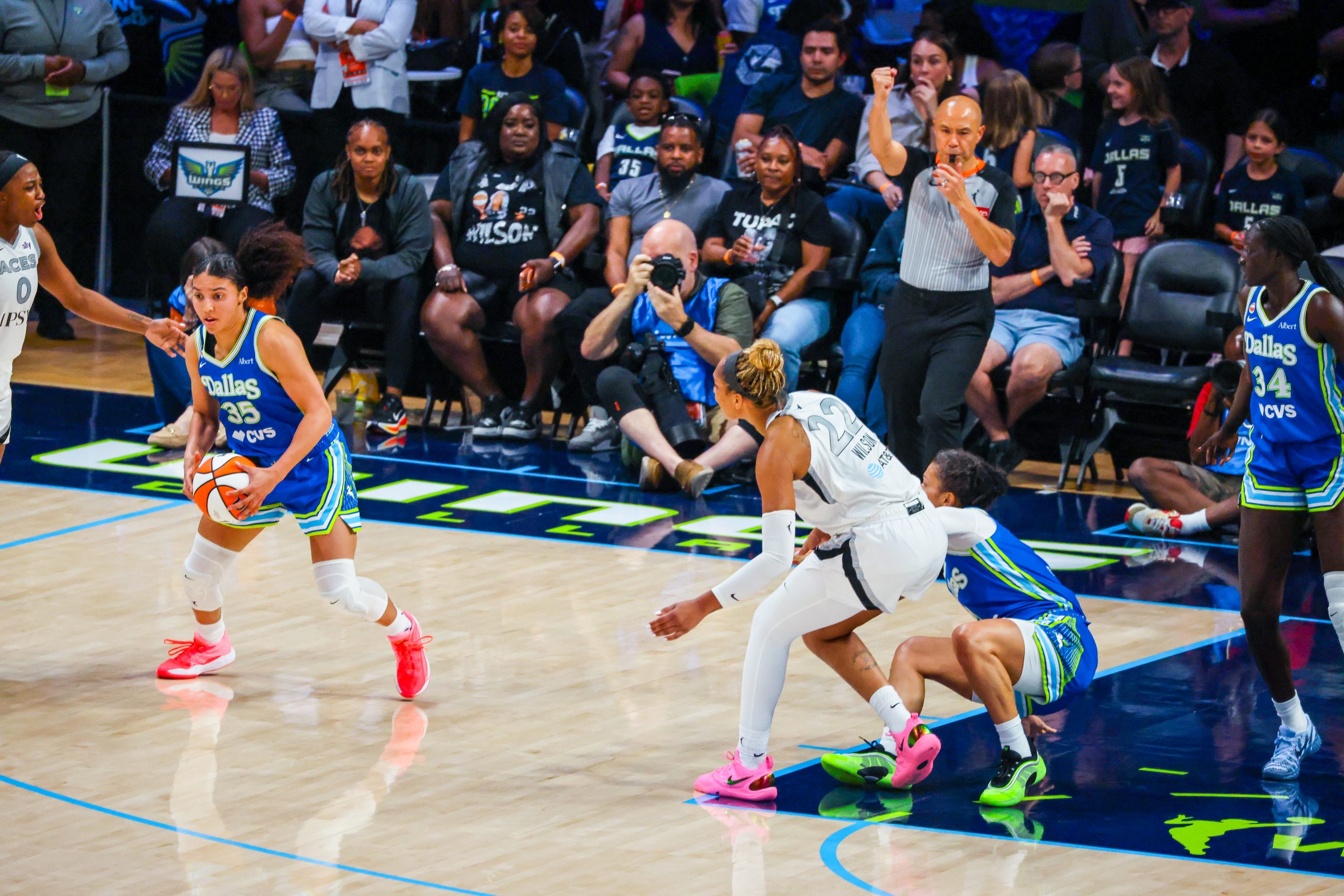
Azzi Fudd has found her confidence being a true playmaker and gritty defender for the Dallas Wings. (Photo: Rachel Schuoler | The Podium Finish)
“I think we have good people in the locker room,” Fudd said when evaluating the team’s early chemistry and rapid development. “When you have a group of good people, it is easy to connect off the court, and then that kind of carries on on the court as well.
“We have a very good young core and they brought in some older vets that can really lead us every day. Lysh [Alysha Clark] tonight was huge. She is a plus-11 in 18 minutes, but it is her insight that she is able to share every day that helps us build as a team.”
This internal leadership structure has allowed Dallas to weather early season performance variances and install a distinct identity rooted in defensive accountability and transition pace. By utilizing Fudd as a definitive perimeter threat, the offense operates with optimal spacing parameters, forcing opposing defenses to cover the entirety of the floor. The gravity she generates on the wing directly creates operating room for low-post cuts and secondary drives.
As Dallas concludes this intensive early season homestand and shifts focus toward the upcoming Commissioner’s Cup schedule, Fudd’s role as a high-efficiency floor spacer stands as a pillar of the team’s long-term competitive strategy. The external expectations may continue to fluctuate as the season progresses, but within the structural architecture of the Dallas offense, the parameters for success remain explicitly clear and structurally sound.