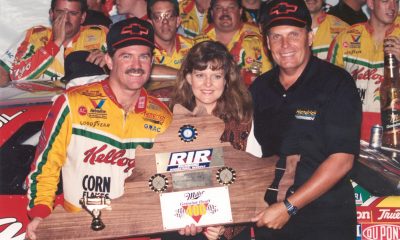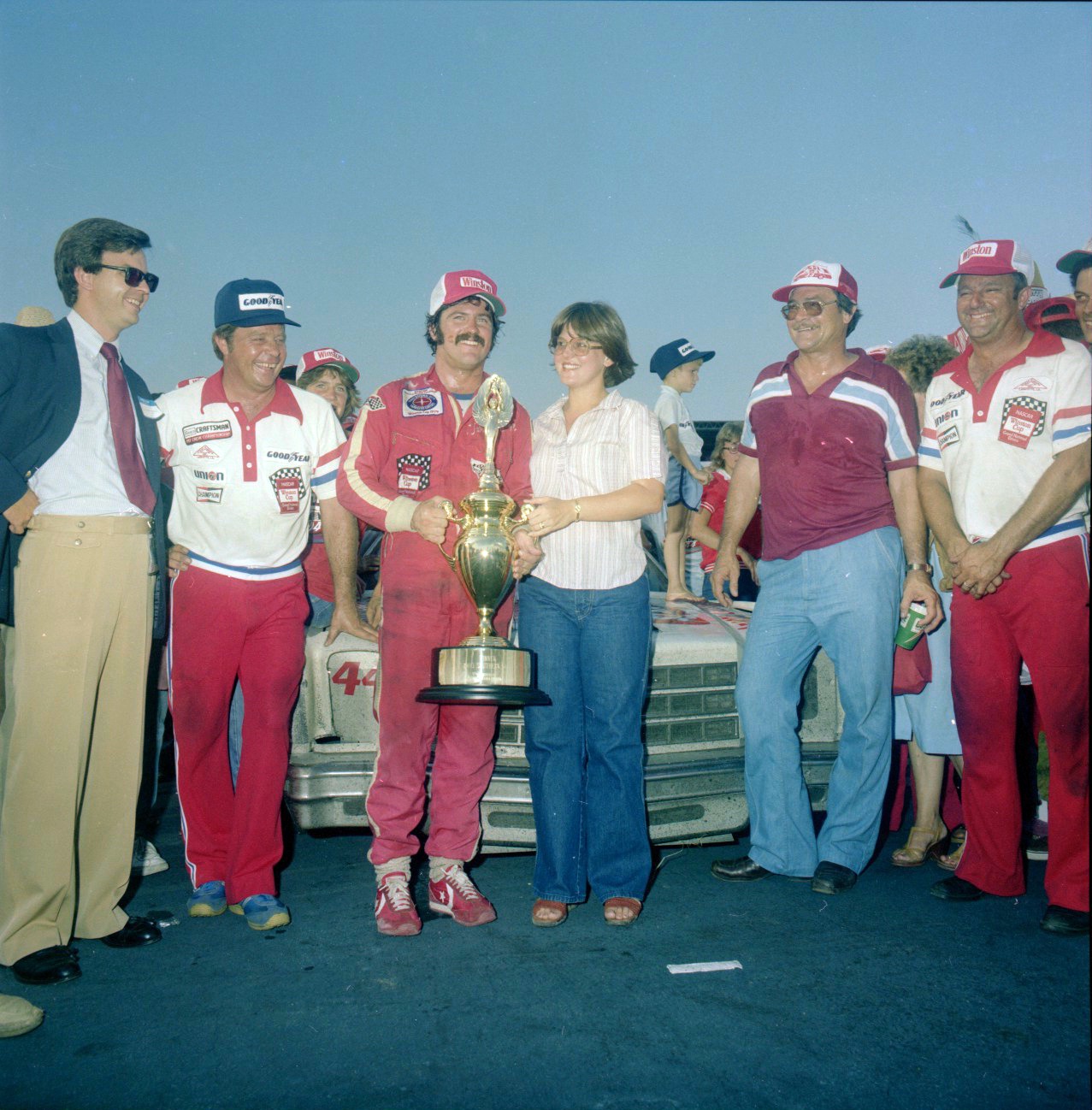
Terry Labonte celebrating with car owner Billy Hagan after capturing his first career NASCAR Cup Series victory at Darlington Raceway in 1980. (Photo: NASCAR Hall of Fame Collection, gift of R.J. Reynolds Tobacco Company)
GEORGETOWN, Texas — Long before stock car racing transformed into a localized Charlotte industry operating out of corporate glass campuses, the garage area belonged to a different breed of competitor. The landscape was dominated by single-car outfits, raw mechanics, and regional icons who relied strictly on mechanical intuition.
Among those who traveled east to challenge the deeply entrenched North Carolina racing establishment, few made a more definitive mark than Terry Labonte.
Known globally to stock car fans as “The Iceman” for his unflappable demeanor behind the wheel, the Corpus Christi, Texas, native built a legacy defined by patience and precision. While the first chapter of this retrospective examined his career-defining decision to join Hendrick Motorsports in 1994, understanding the origin of that championship pedigree requires stepping back into the grit of the 1980s. It was an era when an underdog Texas operation took on the giants of the sport and won.
The Texas Pipeline
The foundation of Labonte’s NASCAR Hall of Fame career was built far from the traditional hubs of stock car racing. Before conquering the high banks of Daytona or the grueling asphalt of Darlington, a teenage Labonte was sharpening his skills on the short tracks of the Lone Star State. It was there that he caught the eye of Billy Hagan, a colorful businessman and racer who saw immense potential in the young driver.
“Billy was sponsoring my short track car in Texas,” Labonte said. “And so we were racing in San Antonio and Louisiana, Houston, all around there.”
The path from local short tracks to the pinnacle of motorsports accelerated quickly. Hagan already possessed an established Cup Series team, and he gave his young driver the ultimate opportunity to test his mettle against the greatest names in racing history.
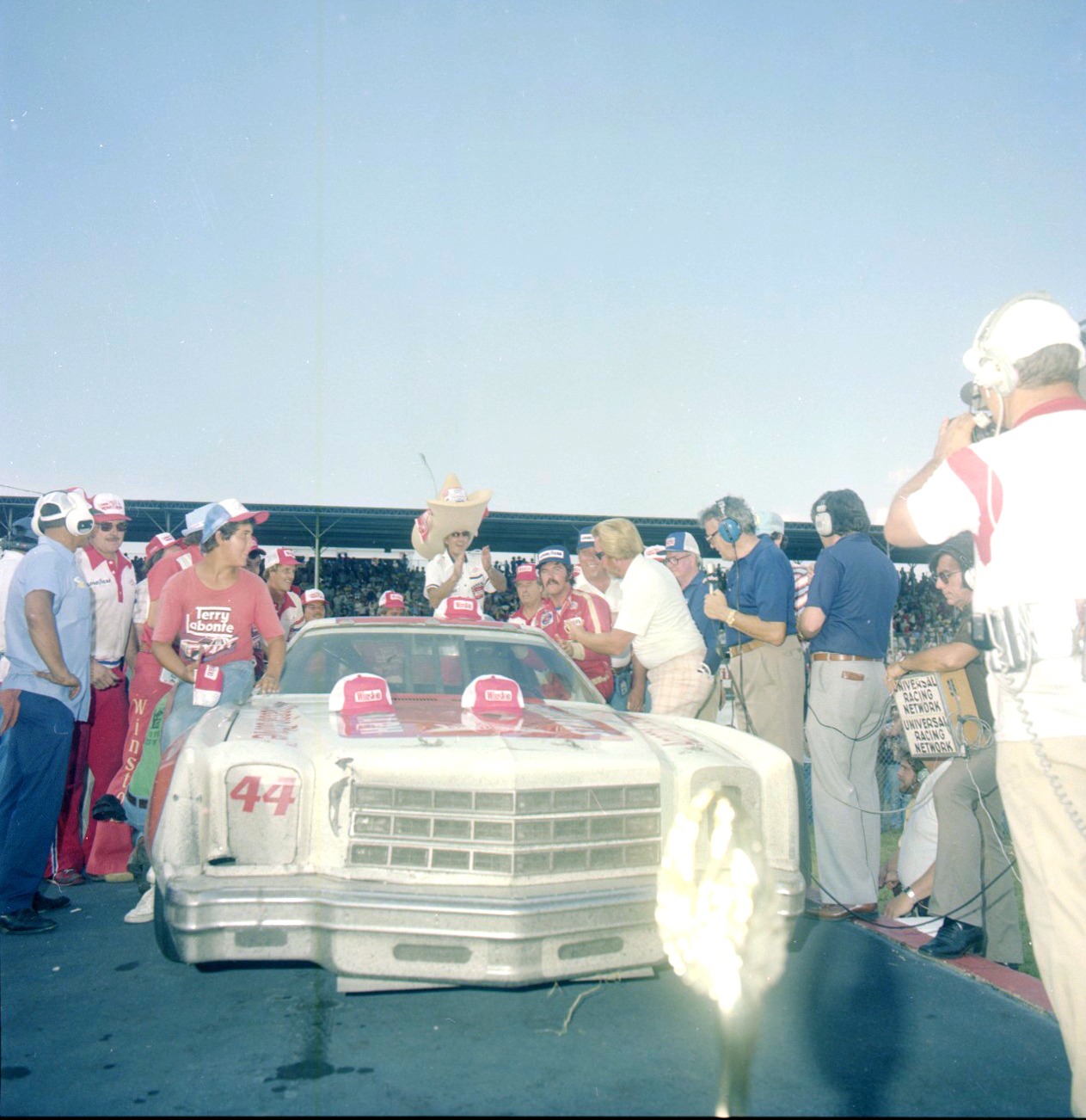
Terry Labonte realized the dream of a lifetime with Billy Hagan. (Photo: NASCAR Hall of Fame Collection, gift of R.J. Reynolds Tobacco Company)
“He gave me the opportunity to move to North Carolina and run his Cup car,” Labonte said. “And so I was like, man, I’m 21 years old, I’ve just looked up to all these guys all my life, and it was just a real thrill for me to be able to go and do this.”
Arriving in North Carolina as a 21-year-old outsider meant navigating an intense learning curve. The garage area was populated by legendary figures like Richard Petty, David Pearson, Cale Yarborough, and Buddy Baker. For a young driver trying to secure his footing, respect was not given freely; it had to be earned lap by lap.
“Being a newcomer like I was coming in, you have to really, you’ve got to earn your respect from everybody,” Labonte recalled. “So, you know, I just kind of was in the mindset, ‘Hey, we’re going to go out and we’re going to do our very best every weekend and try not to get in the way.’ You know, we don’t want to mess up Richard Petty and David Pearson and Cale Yarborough, these guys that are racing for championships and things like that. And we were just kind of really trying to learn.”
The Five-Year Prophecy
The educational phase of Labonte’s career yielded rapid dividends. In 1980, the team captured its first major victory at Darlington Raceway, one of the most demanding circuits on the schedule. The breakthrough win set off a celebration, but it also prompted a bold prediction from the team owner that caught the young driver off guard.
“I’ll never forget that we won our first race at Darlington in 1980,” Labonte said. “And we’re up in the press box after the race and Billy said, ‘Yeah, I think we’re going to probably win the championship within five years.’ And I looked at him and I thought to myself, ‘We just won our first race, you know? You’re predicting a championship?’ But in 1984. we won the championship, so I kind of thought to myself, looking back, I said, ‘Man, he knew more about this than I did,’ you know?”
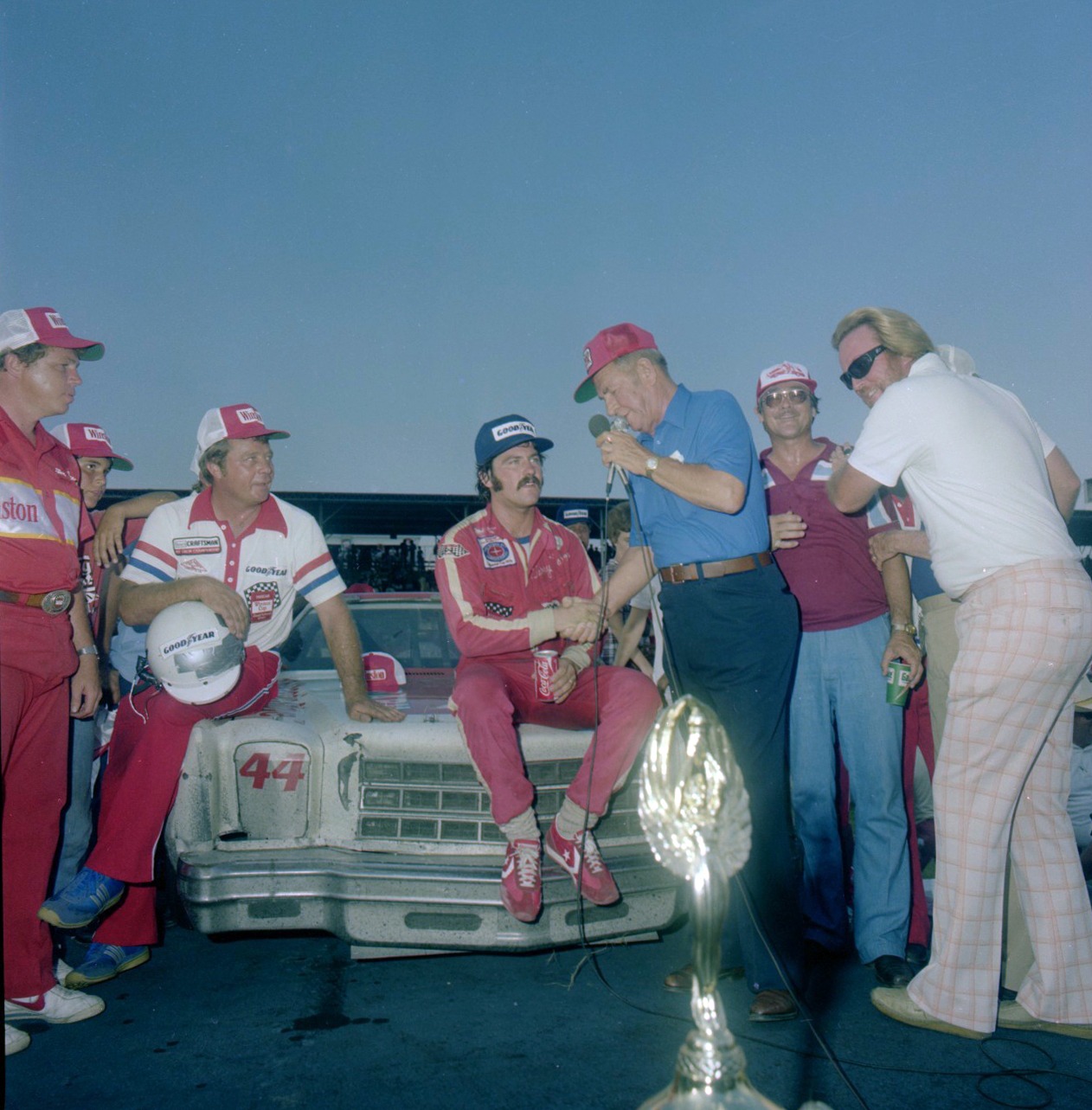
Terry Labonte being interviewed in Victory Lane after winning the 1980 Southern 500 at Darlington, a breakthrough that prompted Hagan’s accurate five-year title prophecy. (Photo: NASCAR Hall of Fame Collection, gift of R.J. Reynolds Tobacco Company)
The 1984 season remains a seminal moment in modern NASCAR history. It featured a changing of the guard, with a crop of young drivers including Rusty Wallace and Bill Elliott beginning to assert their dominance alongside established veterans. Yet, amid the fierce competition, Hagan’s unheralded Texas operation steadily marched toward the title by prioritizing consistent execution.
“We just went out every week and did our very best,” Labonte said. “And back then, of course, I think it’s back to it today again, but you kind of looked at the points after every race. Everybody’s looking at the point standings, you know? And that was the big deal. And to win the championship is really, really, you know, that’s what everybody wants to do, is try to win the championship. That’s really hard to do.”
The Riverside Finale
The battle for the 1984 championship eventually narrowed down to a classic duel between Labonte and Harry Gant. The title fight was settled at Riverside International Raceway, a formidable road course in California that required absolute technical precision and immense physical stamina.
The weekend was plagued by inclement weather, forcing the team to find unconventional ways to get the track ready for competition.
“It had rained that day, and so the race was late in getting started, you know?” Labonte said. “I didn’t know if we were going to get to run or not. And you know, they finally got the track dry. And it was the coolest thing, I think they let everybody in the infield out there in their street car, drive around the track to help dry the track out. So we were out there in a rental car, you know, with our crew, riding around.”
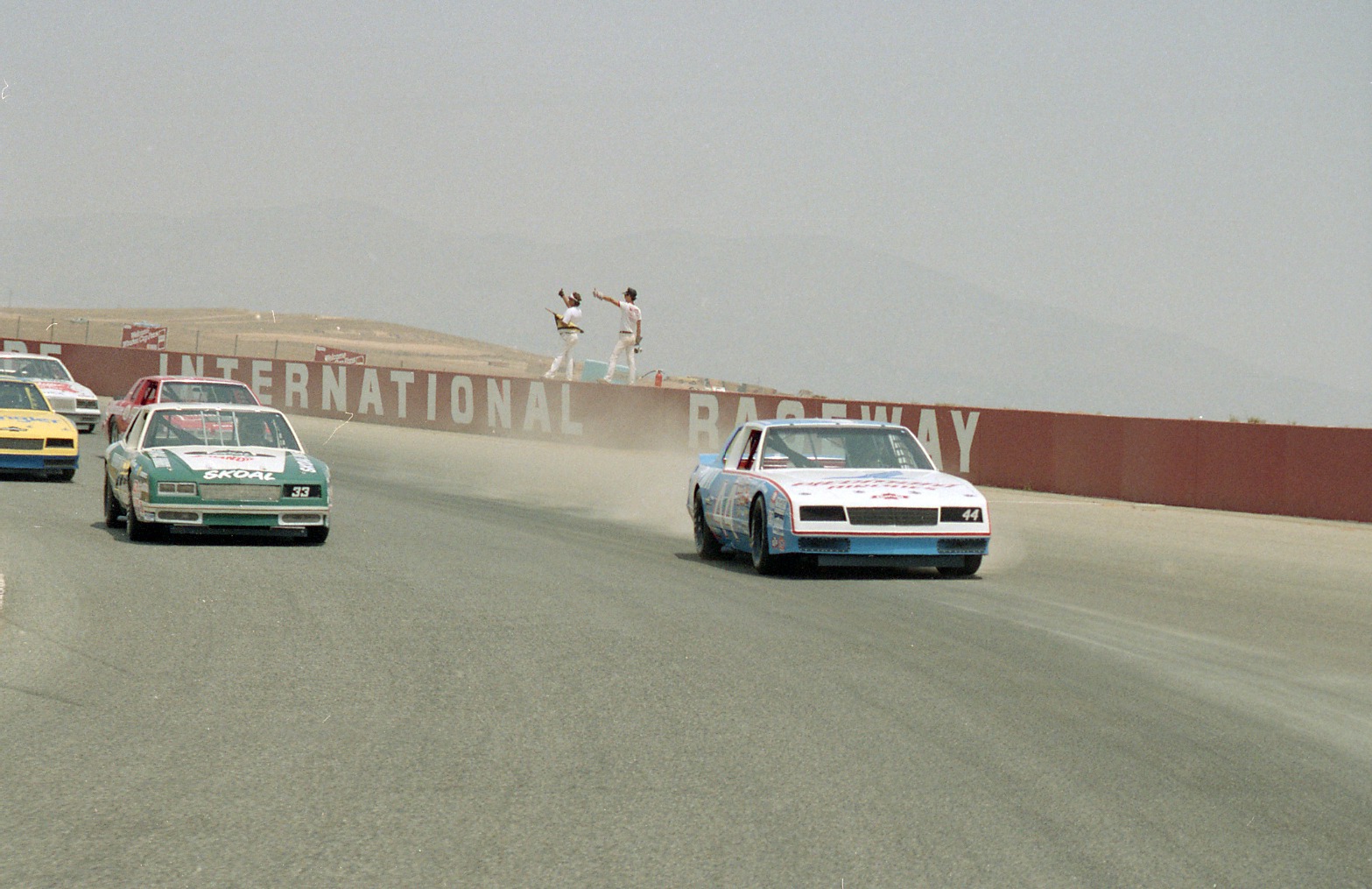
Terry Labonte pilots the No. 44 Piedmont Airlines Chevrolet ahead of Harry Gant’s No. 33 machine during the late-afternoon title deciding moments at Riverside International Raceway in 1984. (Photo: NASCAR Hall of Fame Collection, gift of R.J. Reynolds Tobacco Company)
Once the green flag dropped, Labonte demonstrated the elite composure that would characterize his entire career. After surviving a violent wreck at the same track in 1982, the finale offered an opportunity for personal redemption. The team secured the pole position, led the early portions of the event, and remained exactly where they needed to be as the daylight began to fade.
“I remember about 10 laps to go, I think I was running third or fourth, and Dale Inman was the crew chief and he comes on the radio and he said, ‘Hey, if you just finish right where you are, we’re going to win the championship because Harry’s running eighth or ninth or something like that,'” Labonte said. “So Dale was telling me to, ‘Hey, could you be please be careful, you know? and not, we’ve got to finish this race.’ And so I was like, I didn’t say nothing, I knew what he was saying, and so I just kind of fell back a little bit, just, you know, rode the last 10 laps out there, and we wound up on top and won the championship.”
At just 28 years old, Labonte had secured his place among the icons of the sport, a life-changing achievement that took time to fully process.
“At the time, you know, I’ll be honest with you, I just turned 28 that weekend, I didn’t realize how big a deal it was to win the championship,” Labonte admitted. “But it was a big deal.”
The Inman Mindset
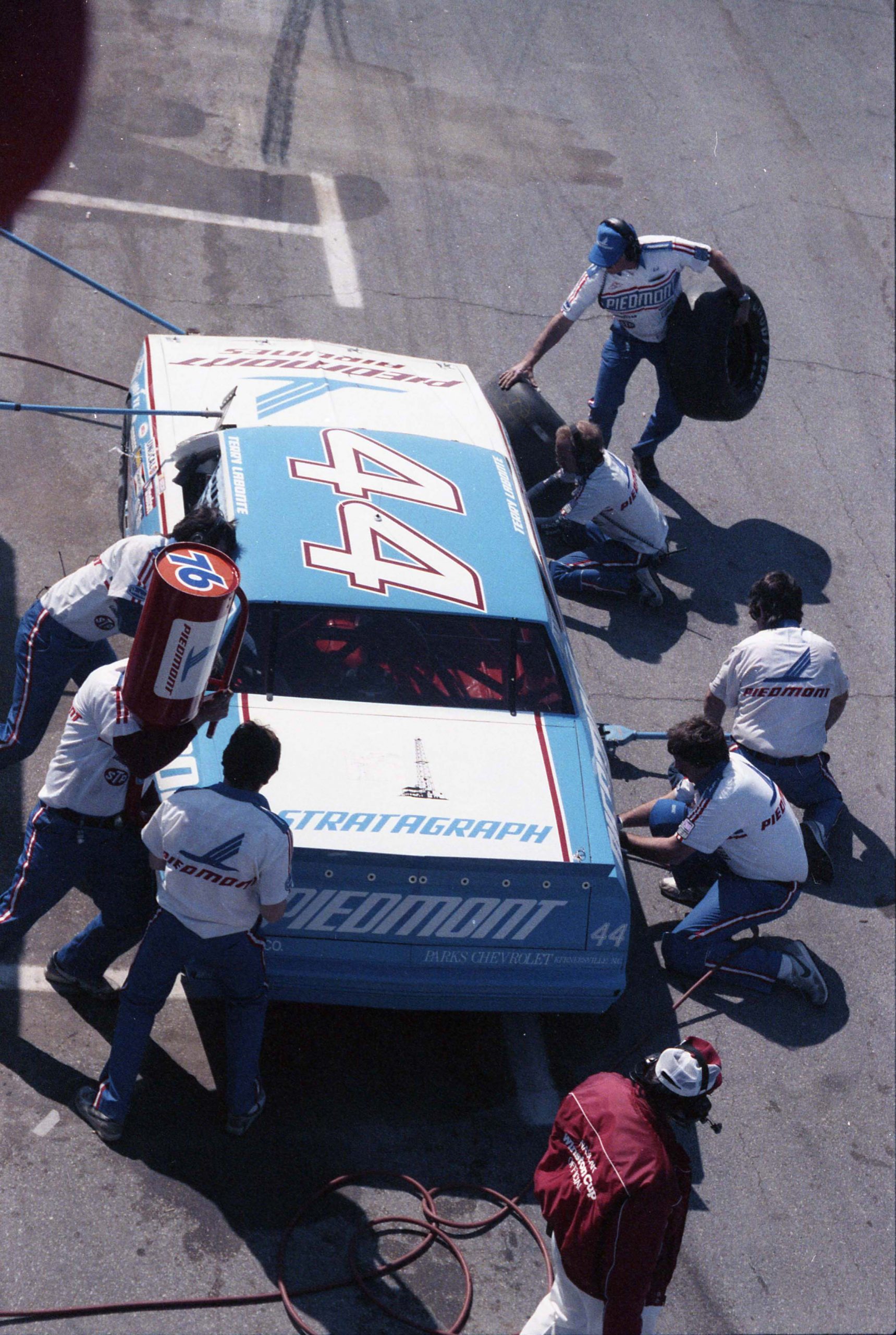
The No. 44 Billy Hagan crew, under the institutional leadership of legendary crew chief Dale Inman, executing a precise pit stop for Terry Labonte. (Photo: NASCAR Hall of Fame Collection, gift of R.J. Reynolds Tobacco Company)
A critical component of that 1984 title run was the presence of legendary crew chief Dale Inman. Having achieved monumental success at Petty Enterprises, Inman brought an unshakeable sense of leadership and structure to Hagan’s organization. For Labonte, working alongside Inman provided an invaluable education in how to manage a race team effectively.
“Dale Inman, I’ve said this before, but Dale Inman is like one of the very few guys that I’ve ever been around who is not afraid to hire people smarter than him,” Labonte said. “And he wants to hire people smarter than him and he worked hard at trying to get the best people he could to come work on that team. He was just the kind of guy that had enough confidence he wasn’t worried about somebody trying to steal his job.”
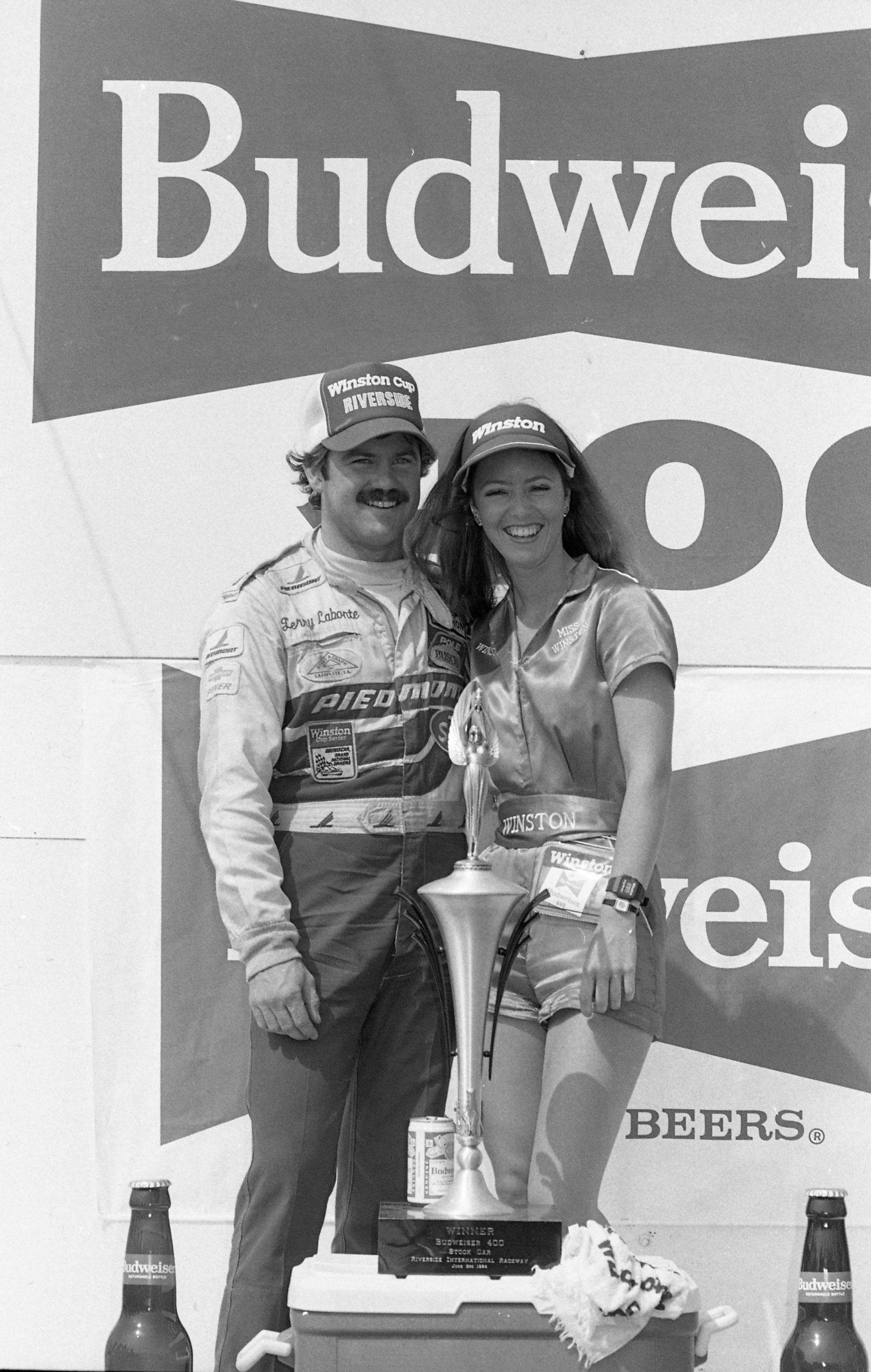
Terry Labonte scored the first of his two NASCAR Cup Series championships at age 28. (Photo: NASCAR Hall of Fame Collection, gift of R.J. Reynolds Tobacco Company)
That security allowed Inman to extract the absolute maximum potential from his personnel, a lesson in leadership that Labonte observed closely.
“He was a great leader in the aspect that he surrounded himself with really good people that could do different things on the team, you know, that could do them better than Dale could,” Labonte explained. “And so Dale just kind of, he would oversee everything and he’d, you know, walk around and you know, check on everybody and what they’re doing and things like that. Looking back on it, that’s really how he operated. And I can see how they had so much success at Petty Enterprises.”
The Cat And Mouse Game
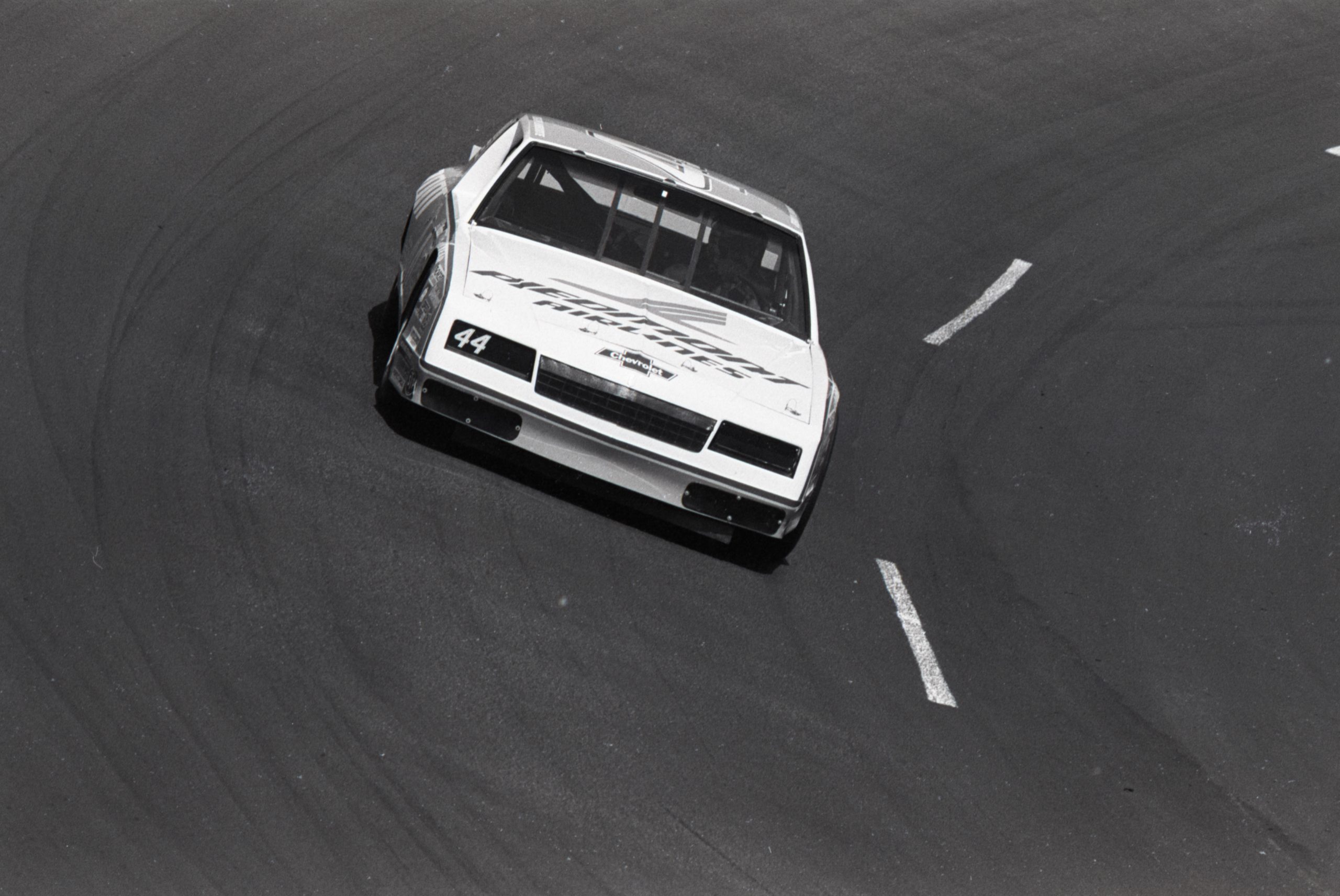
Terry Labonte maneuvering the sleek, custom-fabricated lines of the Piedmont Airlines Chevrolet, built during an era defined by a constant technical game of wits with inspectors. (Photo: NASCAR Hall of Fame Collection, gift of R.J. Reynolds Tobacco Company)
Beyond the leadership of figures like Inman, racing in the 1980s required a high degree of cleverness and technical adaptability. Long before laser inspection grids and single-source spec parts standardized the garage, competition was driven by fabrication teams constantly pushing regulatory boundaries.
“The teams all, always had their own engine deals, you know?” Labonte said. “Every team built their own cars. It was all just a bunch of single-car teams that were all good. And so it was a lot different than it is today. There were a lot of people that worked on those teams that were a lot smarter than the NASCAR inspectors. And you know, it was really a kind of a cat and mouse game between you know, who could outsmart the inspectors more.”
This environment required keeping a sharp eye on the innovations of rival teams during the race weekend.
“When we’d go to the races we’d always take one or two of our fab guys with us to stand down there and watch the car go through inspection just to look at them,” Labonte said. “You know, just stand back and look at them and see what they’re doing different than we’re doing you know, and see if they could pick up anything.
“We did that a lot. I mean those guys went to the races a lot just you know, kind of observed and walked around and it’s like, ‘Hey, this so-and-so’s got this and that done a little bit different and we might need to try that.’ So you just always, always you know, really worked hard at trying to get a little bit better.”
The Budweiser Seat
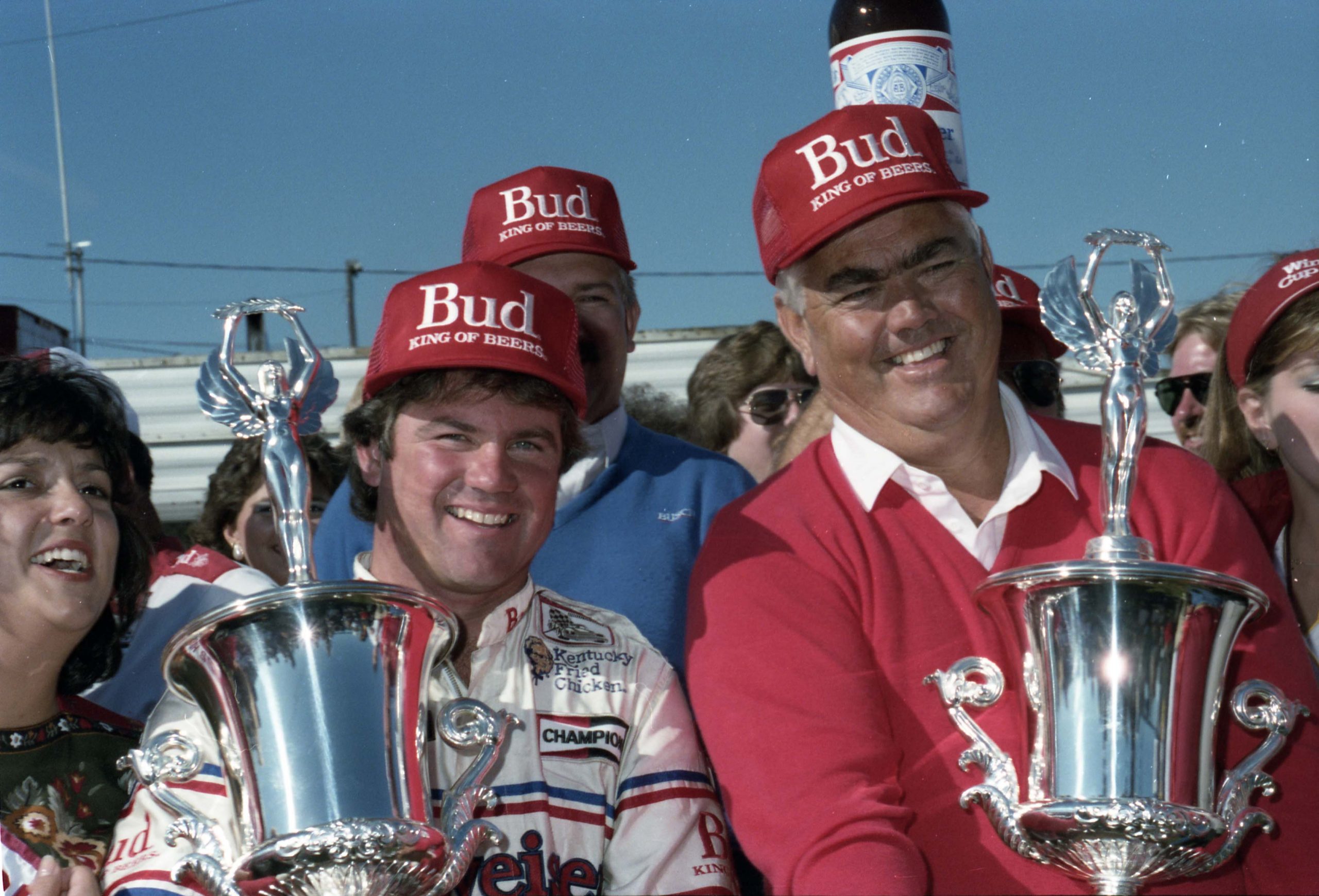
Terry Labonte and legendary team owner Junior Johnson flash wide smiles after capturing an authoritative victory at North Wilkesboro Speedway in 1987. (Photo: NASCAR Hall of Fame Collection, gift of R.J. Reynolds Tobacco Company)
Following his initial title run with Hagan, Labonte moved to another legendary operation, stepping into the famous No. 11 Budweiser seat for owner Junior Johnson ahead of the 1987 season. Succeeding Darrell Waltrip in what was arguably the most coveted ride of the decade brought immense prestige, but it also came with a massive amount of internal pressure.
“Driving for Junior was a great experience, there’s no doubt about it,” Labonte said. “And I mean, what a legend to be able to drive for Junior Johnson. I thought to myself, I said, ‘God, can you imagine all the people that would love to have this opportunity?'”
Despite securing victories, mechanical unreliability ultimately hindered their ability to secure a Winston Cup championship together.
“We won some races, we didn’t win a championship. That was disappointing,” Labonte said. “We had a lot of races that we unfortunately didn’t finish on you know, all eight cylinders, you know? We had lost, had some engine problems throughout the year and that I think that’s what really hurt us in the points standings and you know probably could have cost us a few races. Championships are hard to win and we didn’t do it.”
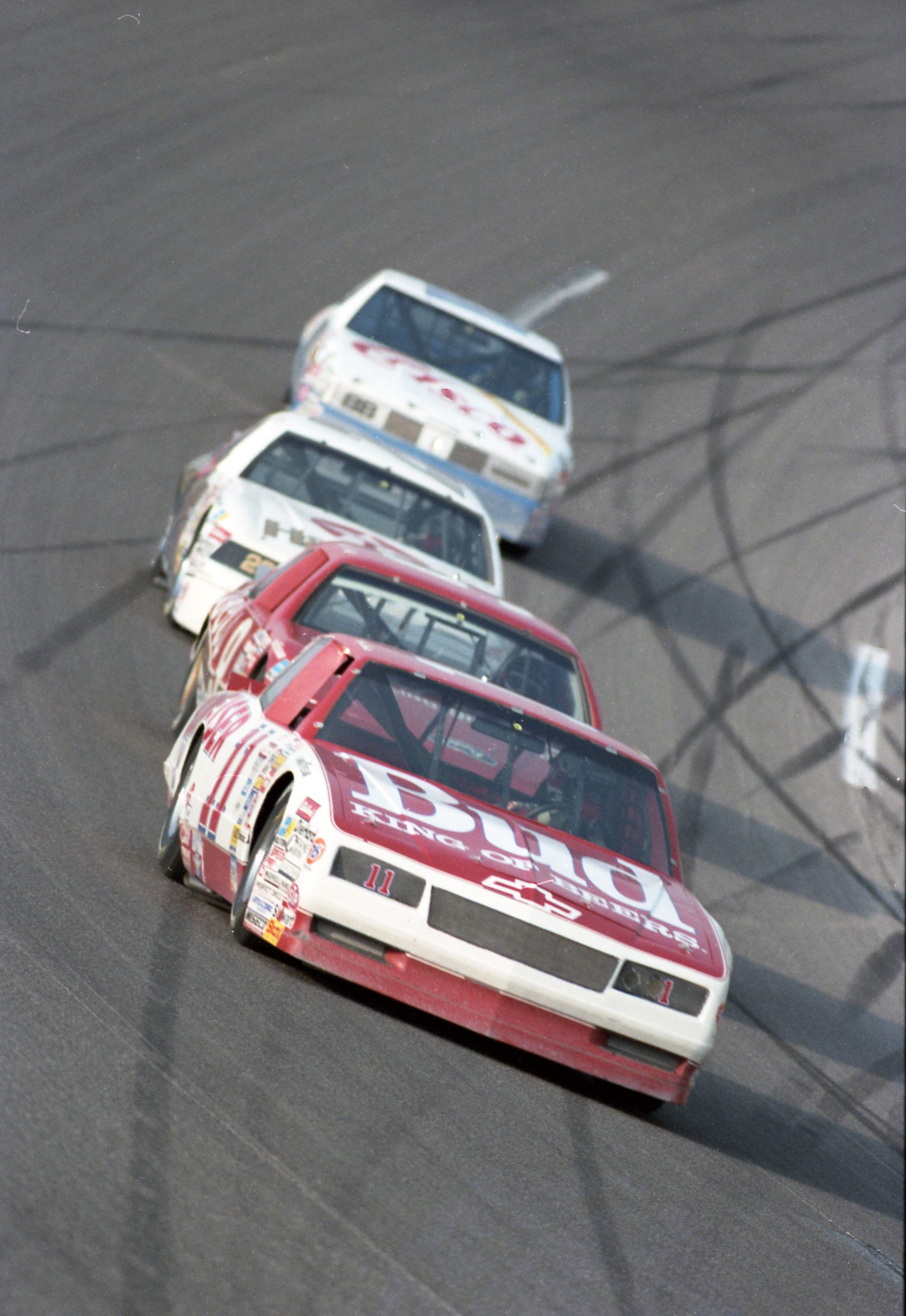
Terry Labonte leads a high-speed freight train of icons at Talladega Superspeedway in 1987, piloting the legendary No. 11 Budweiser Chevrolet Monte Carlo. (Photo: NASCAR Hall of Fame Collection, gift of R.J. Reynolds Tobacco Company)
Whether battling as a Texas underdog with Billy Hagan or managing the immense expectations of driving for Junior Johnson, Labonte’s formative years in the sport forged the exact technical knowledge and psychological resilience that would define his later career. It was a golden era built on resourcefulness, where an outsider from South Texas proved he could stand toe-to-toe with the giants of the sport.
Editor’s Notes