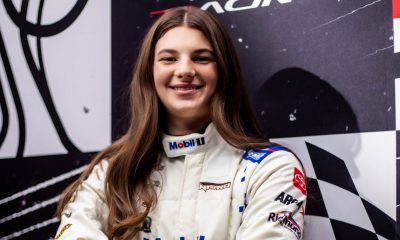
Madelyn Tabor brings a grounded and authentic perspective to the high-intensity world of the American Rally Association. (Photo: Madelyn Tabor Racing)
Madelyn Tabor doesn’t just drive rally cars. She navigates a path defined by heritage, hard-earned growth and a purpose that stretches beyond the cockpit.
For fans more familiar with stock cars or open-wheel racing, Tabor represents a different side of motorsports, one where precision, trust and adaptability take center stage. As a third-generation rally driver competing in the American Rally Association, she is part of a discipline that demands as much mental acuity as it does car control.
And yet, for all the technical complexity behind rally racing, Tabor’s journey into the sport was anything but predetermined.
“I honestly wasn’t super interested in cars growing up,” Tabor said. “It just wasn’t something that I gravitated towards.”
That changed over time. Raised in a family deeply embedded in rally, with parents, grandparents, siblings and extended relatives all involved, exposure was inevitable. But passion came later, sparked during her teenage years after watching her younger brother compete in quarter midget racing.
By 18, just weeks before graduating high school, Tabor entered her first rally event.
“I barely knew how to drive a manual car,” she said with a laugh. “We’d get to the end of a stage, and I’d ask my dad if he could drive the transits. And he was like, ‘No, you’re driving the car.’”
That early discomfort has since transformed into confidence. Now entering her fifth season in rally competition, Tabor pilots an FIA-homologated Rally3 car in the Limited 4 Wheel Drive (L4WD) class and continues to refine her craft in one of motorsports’ most demanding environments.
Unlike traditional circuit racing, rally places drivers and co-drivers on closed public roads, tackling stages one at a time against the clock. The format requires absolute trust between driver and navigator, as pace notes, often written during reconnaissance runs, dictate every move at speed.
“A lot of times you’re not driving what you see,” Tabor explained. “You’re driving what your navigator is telling you. So there’s a huge amount of trust.”
That trust is something Tabor has built steadily with her co-driver, Sophia McKee. The two have developed a partnership rooted in communication and longevity, a rarity in a sport where pairings can frequently change.
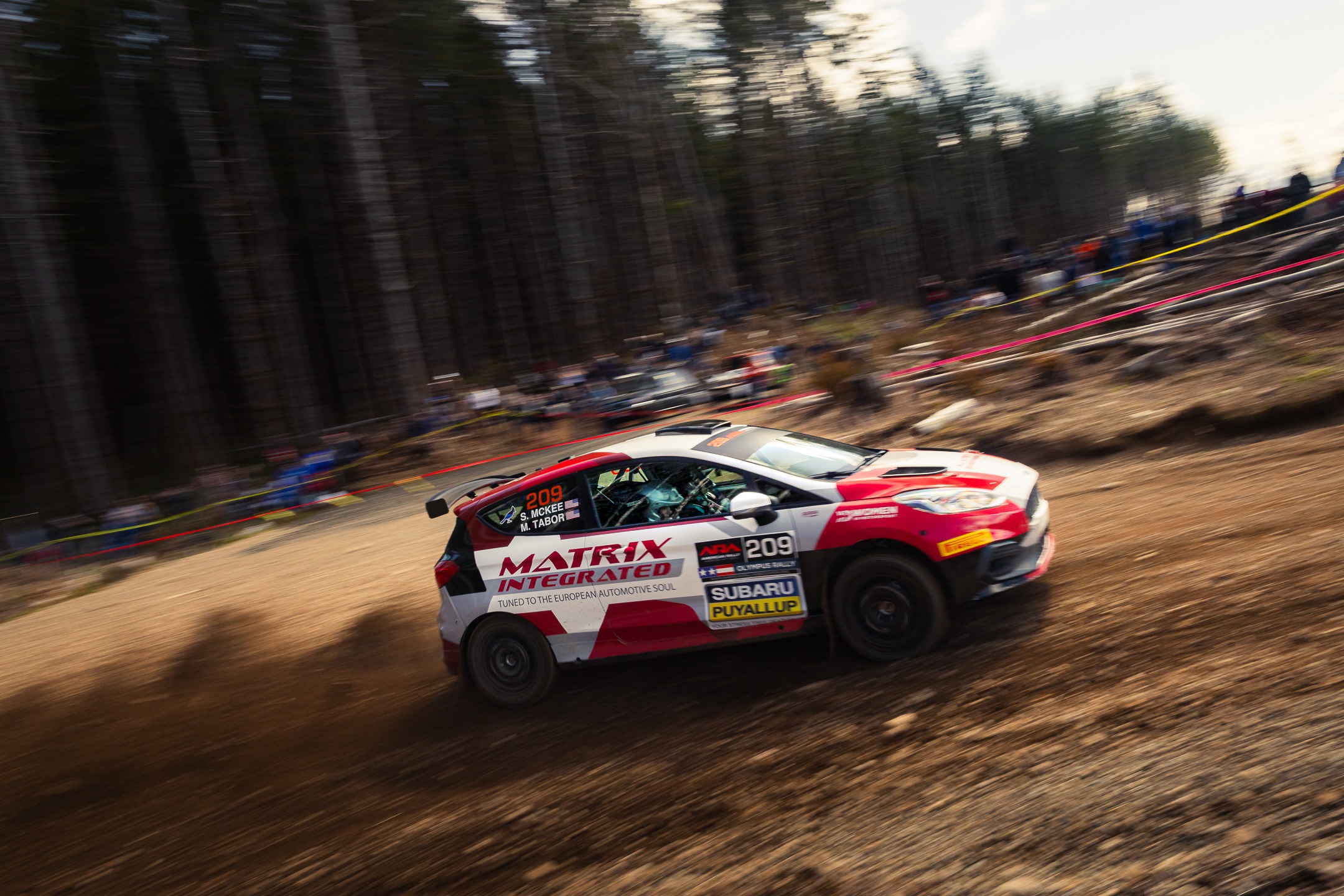
Precision at speed: Madelyn Tabor navigates the technical stages of the American Rally Association in the No. 209. (Photo: Madelyn Tabor Racing)
“To be able to spend so much time with one individual, that takes a lot,” Tabor said. “But with Sophia, I don’t get tired of her. We just have so much fun together, and we communicate really well.”
Their chemistry has proven critical as Tabor transitions into more advanced machinery. Moving from a naturally aspirated Subaru to a Rally3 car introduced new layers of complexity, from sequential gearboxes to advanced systems designed for performance.
“It was a huge jump,” she said. “But being able to make that jump with someone who’s committed to me as I’m committed to her, that’s a big privilege.”
Preparation in rally is as intricate as the competition itself. Before each event, drivers and co-drivers conduct reconnaissance runs, driving stages at controlled speeds to create detailed pace notes. These notes are then refined through video review and repetition, forming the backbone of race execution.
“You’re basically developing your own language with your navigator,” Tabor said. “And you’re constantly refining it to make sure it makes sense for both of you.”
Beyond the car, Tabor has also embraced a holistic approach to performance. She recently began working with a sports nutritionist and trainer, emphasizing the physical and mental demands of rally competition.
“Your brain is processing so much,” she said. “There’s a lot more going on than people realize.”
That dedication extends to her growing role within the sport. becoming the first-ever rally racer to receive a grant from the Shift Up Now Foundation, Tabor is helping expand visibility for women in a discipline that often operates outside the mainstream spotlight.
“Rally is really hard to watch and get out to people,” she said. “So being able to introduce it to a new group, especially women who want to get involved in motorsports, that’s really special.”
Her involvement with organizations like Shift Up Now and Women in Motorsports North America underscores a broader mission centered on representation.
Tabor has seen firsthand the impact of visibility at events, particularly among younger fans who may not realize the opportunities available to them.
“I learned pretty early on that this journey is so much larger than just me,” she said. “It’s representation for young girls and women, and honestly for anyone who wants to see themselves in the sport.”
Despite that responsibility, Tabor approaches competition with a grounded mindset. When she straps into her No. 209 machine, the external expectations fade.
“I try not to feel any pressure,” she said. “I just try to be as authentic as I can. If something doesn’t go right, it doesn’t go right. There’s still a story there.”
That authenticity resonates both on and off the stage roads.
As she prepares for the Olympus Rally in Washington, a marquee event on the ARA calendar, Tabor will debut a new-to-her Ford Fiesta Rally3 car, complete with a refreshed livery inspired by her family’s racing identity.
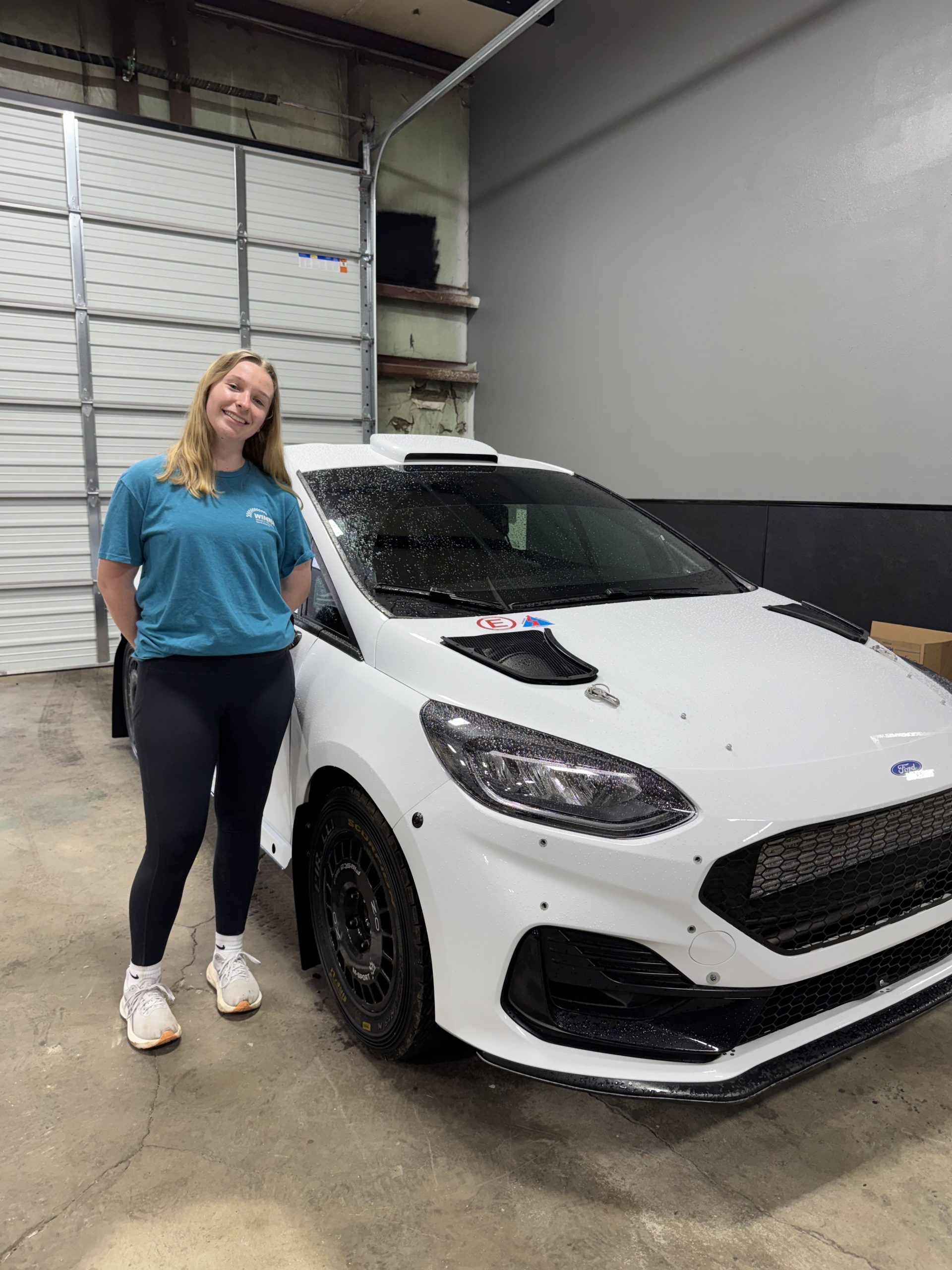
Madelyn Tabor stands with the FIA-homologated Ford Fiesta Rally3, a significant step up in machinery for the 2026 season, as it will feature a yet-to-be-revealed new look. (Photo: Madelyn Tabor Racing)
“It’s going to be very colorful,” she said. “I’ve always wanted something fun and unique that represents me.”
The event itself presents a significant challenge, featuring hundreds of stage miles and a deep field of competitors. For Tabor, it also represents an opportunity to continue building momentum in her career.
“It’s a huge event,” she said. “There’s a lot of excitement around it, and I’m really looking forward to it.”
For fans hoping to follow along, rally’s accessibility remains a work in progress. Live streams are not always guaranteed, but platforms like Sneak Attack and RallySafe offer real-time tracking and timing updates, providing a window into the action.
Even with those limitations, Tabor remains optimistic about the sport’s growth.
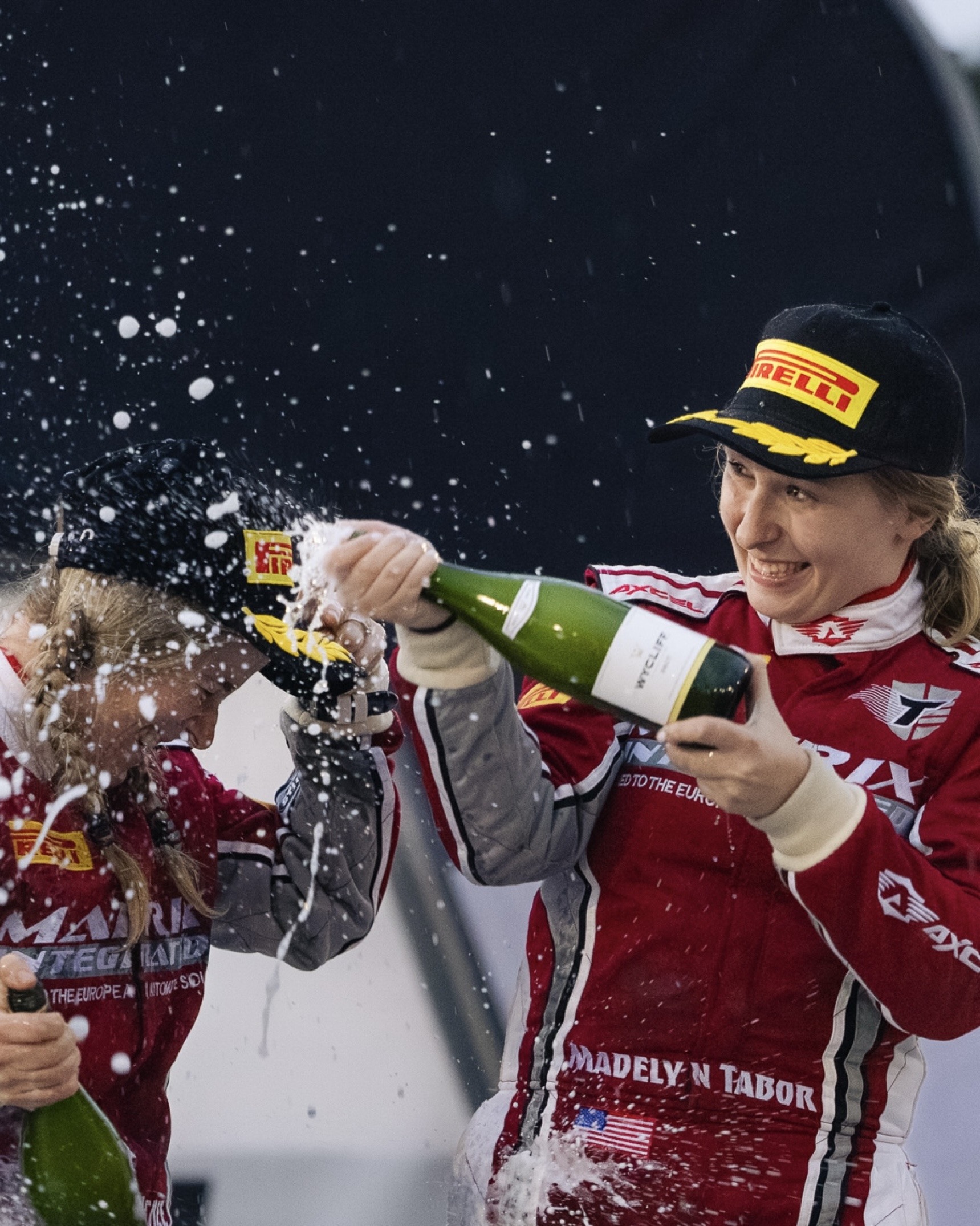
Celebrating the milestones: For Madelyn Tabor, the journey is about more than just stage wins—it’s about representing the next generation of women in motorsports. (Photo: Madelyn Tabor Racing)
“There’s so much potential,” she said. “It’s just about getting more eyes on it.”
In many ways, that is where voices like hers and stories like hers become essential.
Tabor’s journey is not just about competing for stage wins or podium finishes. It is about carving out space in a sport that thrives on individuality while inviting others to see themselves within it.
And if her trajectory so far is any indication, she is doing exactly that, one stage, one story and one connection at a time.
For Tabor, the road ahead is as unpredictable as any rally stage. With experience, support and a clear sense of purpose, she is navigating it with confidence.
“I’m just really grateful,” she said. “It takes a village, and I feel that support every step of the way.”