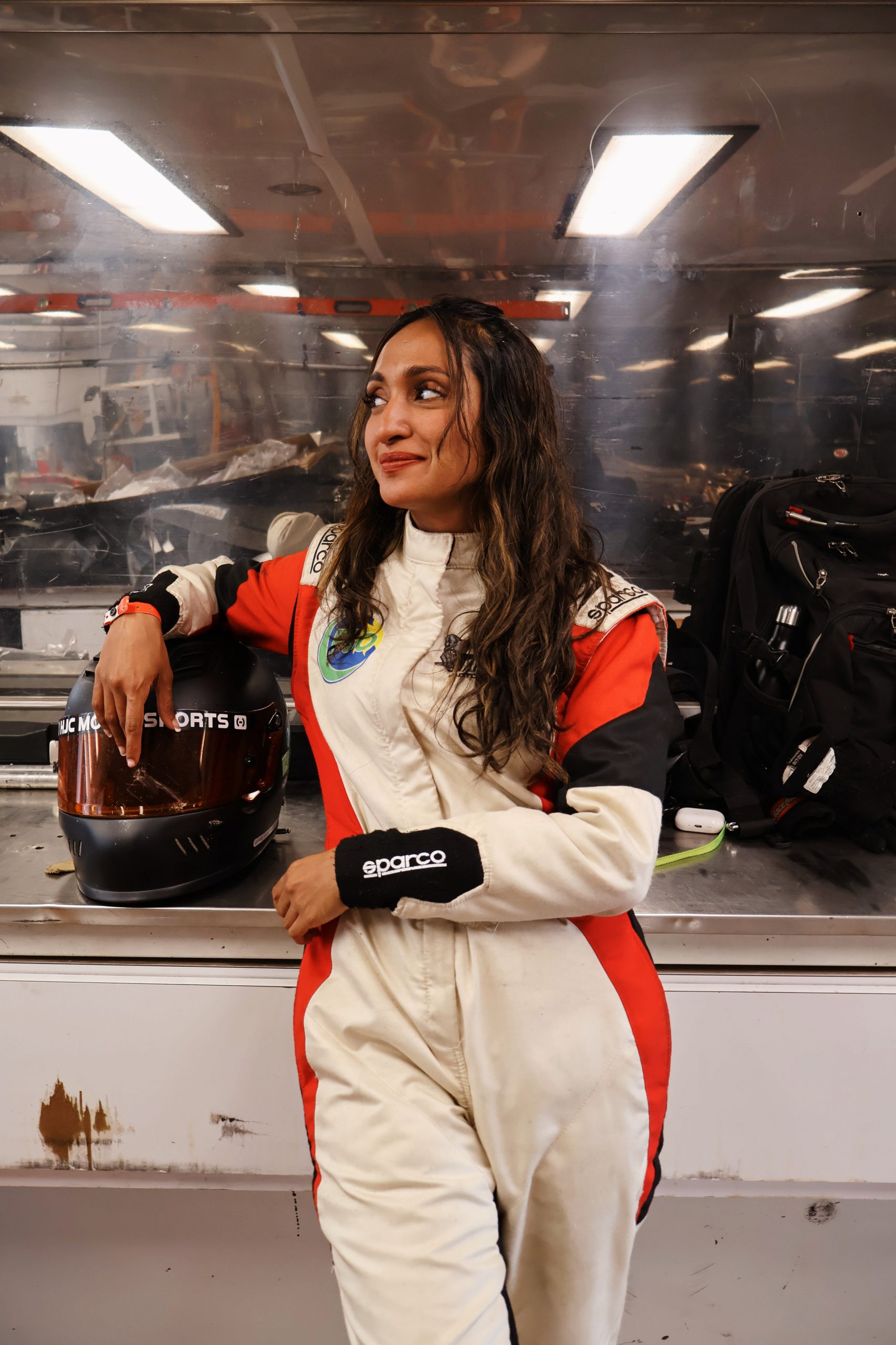
Arshia Akhtar at NOLA Racing America SpeedTour (Photo: Hannah Spagnoletti | The Podium Finish)
NEW ORLEANS — Physician. Race car driver. Team owner. Steward.
By the time Arshia Akhtar introduces herself, it is clear that none of her titles exist in isolation.
Each one carries weight, but when asked which feels most true right now, her answer is immediate. Team ownership is where everything comes together. It is where she has the most control, and where she feels the most aligned with the work she wants to do.
“It’s where I’m the happiest,” she says. “It holds a very personal meaning to me.”
That clarity comes from experience. Akhtar’s path into motorsport has never been linear.
She started in karting at five years old and raced through her early teens before stepping away. Growing up in Saudi Arabia meant navigating cultural expectations that made continuing in the sport difficult, in a country where women were not allowed to drive until 2018.
“I had to take a break because of cultural norms,” she says. “It was getting looked down upon.”
She returned to racing years later while attending medical school in the United States. By then, her perspective had shifted.
“It’s not that these are two different things,” she says. “Racing is science and so is medicine.”
That connection between the two shapes how she approaches both sides of her career.
As a team owner, the responsibility is immediate.
“Making sure the car is 100% safe, making sure everybody is doing their job, and the drivers have the right support to be safe on track,” she says. “That’s my priority.”
On the other hand, as a driver, the focus changes.
“It’s more about execution and making those decisions on the track,” she says. “Somewhat similar to the emergency room, but not fully.”
Through Box Motorsports, Akhtar is building something that extends beyond her own seat in the car. The team operates across the United States, Italy, the United Kingdom, and the Gulf region, with a focus on placing drivers in opportunities that allow them to build long-term careers.
“Not everybody is going to end up in F1,” she says. “If you don’t get there, you need a plan B.”
That plan often includes factory drives and endurance racing, pathways that are just as competitive but far more sustainable for most drivers. It also requires a level of honesty that can be difficult in a results-driven environment.
“When somebody says that maybe this might not be the right future for you, it doesn’t mean you won’t succeed,” she says. “It just means you have to take a modified path.”
Akhtar has applied that mindset to her own career, and it is something she emphasizes with the drivers she works with.
On track, that same awareness becomes critical in a different way.
“The biggest mistake is not knowing where your confidence and skill level plateau is,” she says.
It is a point where results can create a false sense of readiness.
“Your confidence increases because you’ve done well a couple times, but your skill level might not be there yet,” she says. “Then you start pushing beyond your skill level.”
That gap can have consequences beyond a single race.
“That can lead to a dangerous outcome for not just yourself, but for others as well.”
Risk is part of racing, but Akhtar is deliberate about how it should be approached.
“A controlled, analytical risk,” she says. “You need to understand not just the car’s limit, but your limit as well.”

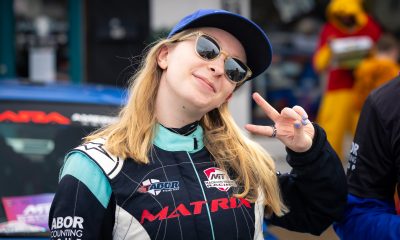
Arshia Akhtar is making her dreams come true racing for Box Motorsports. (Photo: Hannah Spagnoletti | The Podium Finish)
Off track, the stakes are different but no less important.
“This is a people’s sport,” she says. “If you screw over other people, it becomes a really big issue very fast.”
In a small, tight-knit paddock, reputation carries weight.
“It’s very important to be a good human being,” she says.
That perspective extends to the broader structure of the sport, particularly when it comes to opportunities for women.
“There’s not just an accessibility issue,” she says. “There’s a vision issue.”
Representation plays a role, but so does perception.
“If you don’t see women at that level, people start to believe they aren’t there,” she says. “It becomes self-confirming bias.”
For Akhtar, that reality is personal. In her home country, the barriers are not just financial or logistical.
“We don’t even have an actual racetrack,” she says. “Only karting tracks.”
Access to coaching, facilities, and competition remains limited. Cultural expectations can add another layer.

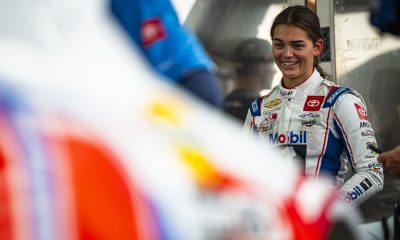
Arshia Akhtar is showcasing how she belongs in a sport predominantly male. (Photo: Hannah Spagnoletti | The Podium Finish)
“These activities can be viewed as too masculine,” she says. “These are real considerations.”
Progress, she believes, starts with using what is available.
“If you can get into sim racing or something similar, start there,” she says. “Then build your skill.”
It is a practical approach, shaped by experience rather than theory.
The same can be said for how she handles outside opinions.
“I hear everybody,” she says. “But I’m very selective about who I actually listen to.”
Not every voice carries equal weight.
“When somebody tells me I can’t do something, I ask why,” she says. “If I can justify it to myself, I don’t need to focus on that.”
At this stage in her career, the standard is clear.
“I don’t have anybody else to impress except myself.”

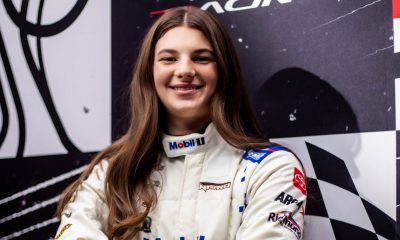
Arshia Akhtar showcased she could be on the podium finish (in more ways than one) after a strong race at NOLA Motorsports Park. (Photo: Hannah Spagnoletti | The Podium Finish)
That mindset has carried her into a position where she is now one of the only active female drivers with an FIA license at her level from her region. It is a milestone, but not an endpoint.
“There are multiple layers that need to change,” she says, pointing to accessibility, coaching, and long-term support.
“We can’t fix everything,” she adds. “But we can improve step by step.”
For now, she continues to balance both sides of her career, building opportunities for others while still competing herself.
“I’m pushing for the podium,” she says.
For Arshia Akhtar, that pursuit is only part of the picture.